
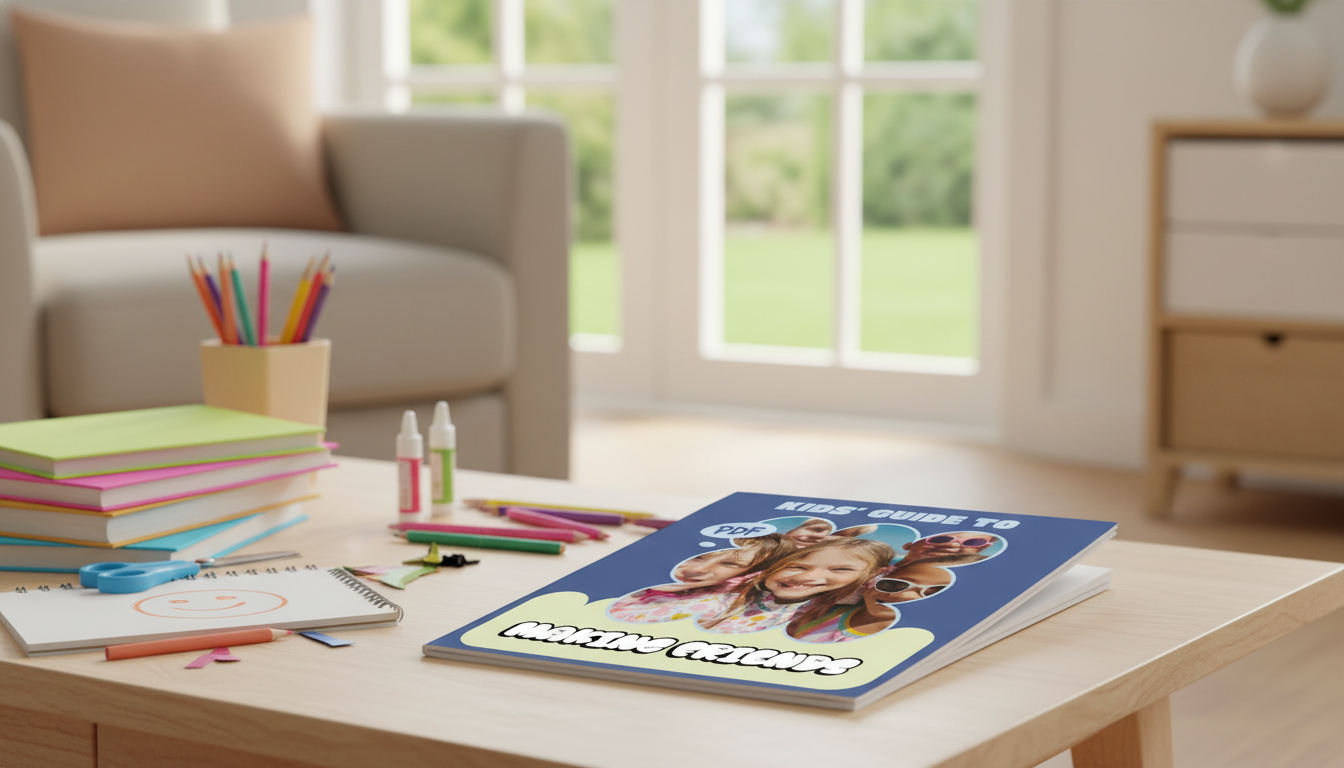
Making friends can feel confusing for many kids—especially when they don’t know what to say, how to join a game, or what to do after a misunderstanding. A simple, repeatable practice plan helps children build real-life social confidence while giving parents and caregivers clear ways to support progress at home, at school, and in activities.
Friendship often looks effortless from the outside, but it’s usually built from small skills practiced over and over: greeting, listening, taking turns, and repairing after conflict. Some kids strongly want friends yet struggle with timing, reading body language, or handling rejection. When children have a plan for what to do in common moments, confidence often follows competence—because uncertainty and anxiety drop.
Support from adults is most effective when it feels like coaching rather than rescuing. Coaching looks like short practice, quick feedback, and a chance to “try again.” Rescuing skips the learning and can unintentionally signal that the child can’t handle the situation. Resources grounded in social and emotional learning principles can help; for reference, CASEL outlines core competencies like self-management and relationship skills that map closely to friendship habits (CASEL fundamentals).
Different ages come with different social puzzles. Early elementary kids often need help approaching peers, sharing control of play, waiting for turns, and coping with “no.” Upper elementary years add layers—group dynamics, teasing versus joking, loyalty, and the sting of exclusion. New settings (a new school, sports, clubs) can be especially hard because kids need a fast way to introduce themselves and find a shared activity.
Shy or anxious kids usually do best with low-pressure interactions and predictable scripts. Kids with big feelings—frustration, embarrassment, jealousy—benefit from emotion tools so one intense moment doesn’t derail a friendship. If you’re looking for parenting support that pairs well with skill-building at home, the CDC’s positive parenting resources are a helpful baseline (CDC: Positive Parenting Tips).
| Situation | What the child may feel | Skill to practice | A simple phrase to try |
|---|---|---|---|
| Walking up to a group | Nervous, unsure where to stand | Joining politely + waiting for a pause | “Can I play too?” |
| Not being chosen first | Hurt, angry, embarrassed | Coping + choosing a next step | “It’s okay—can I be on the next round?” |
| Someone breaks a rule | Frustrated, treated unfairly | Problem-solving with calm words | “Let’s agree on the rules again.” |
| Accidentally hurting feelings | Guilty, defensive | Repairing and apologizing | “I’m sorry. I didn’t mean that. Can we restart?” |
| Friend plays with someone else | Jealous, left out | Flexibility + making a plan | “Want to hang out after recess?” |
Social growth sticks when practice is small, consistent, and specific. Choose one micro-skill for the week—something measurable like holding eye contact for two seconds, asking one question, or giving one compliment. Then run 3–5 minutes of role-play using situations your child actually faces (lunchroom, recess, soccer warm-ups, bus line).
Use “try again” coaching: replay the same moment with a better choice instead of delivering a long lecture. After a real-life attempt, do a quick debrief: what went well, what felt hard, and what to try next time. Track wins visibly—checkmarks or a simple chart—so effort gets rewarded even when the outcome isn’t perfect.
Many friendship struggles improve when kids practice a handful of repeatable tools:
For additional child-focused guidance on social development, HealthyChildren.org from the American Academy of Pediatrics offers practical, age-aware support (American Academy of Pediatrics).
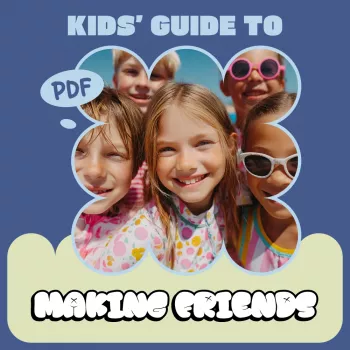
If you want a ready-to-use, practical set of friendship exercises, Kids’ Guide to Making Friends (Digital Download) is designed around everyday social situations. It supports confidence-building through guided prompts, practice exercises, and reflection—helping kids learn what to say, how to listen, and how to handle misunderstandings.
| Format | Best for | Primary focus | Price |
|---|---|---|---|
| Digital download | Kids practicing friendship skills with parent/caregiver support | Social skills, confidence, emotional growth, repair after conflict | $5.99 |
Friendship growth goes faster when kids also build frustration tolerance and bounce-back skills. For families who want a separate resource focused on mindset and persistence, Building Mental Toughness Guide (Digital Download) can complement social practice by reinforcing routines like goal-setting, coping with setbacks, and sticking with a plan.
Most friendship workbooks work best from early elementary through upper elementary, with adult support adjusted to the child’s reading level. Younger kids often do better when you read prompts aloud and lean more heavily on role-play and pictures.
Use low-pressure practice: brief role-plays, predictable scripts, and small-group settings where the child can warm up. Helpful starters include “Can I sit here?” and “Do you want to play after this?” while praising effort rather than outcome.
Noticeable improvement often takes weeks to months, especially when kids practice the same micro-skill across multiple real-life moments. Progress tends to be faster when you focus on one weekly goal and track small wins consistently.










Leave a comment