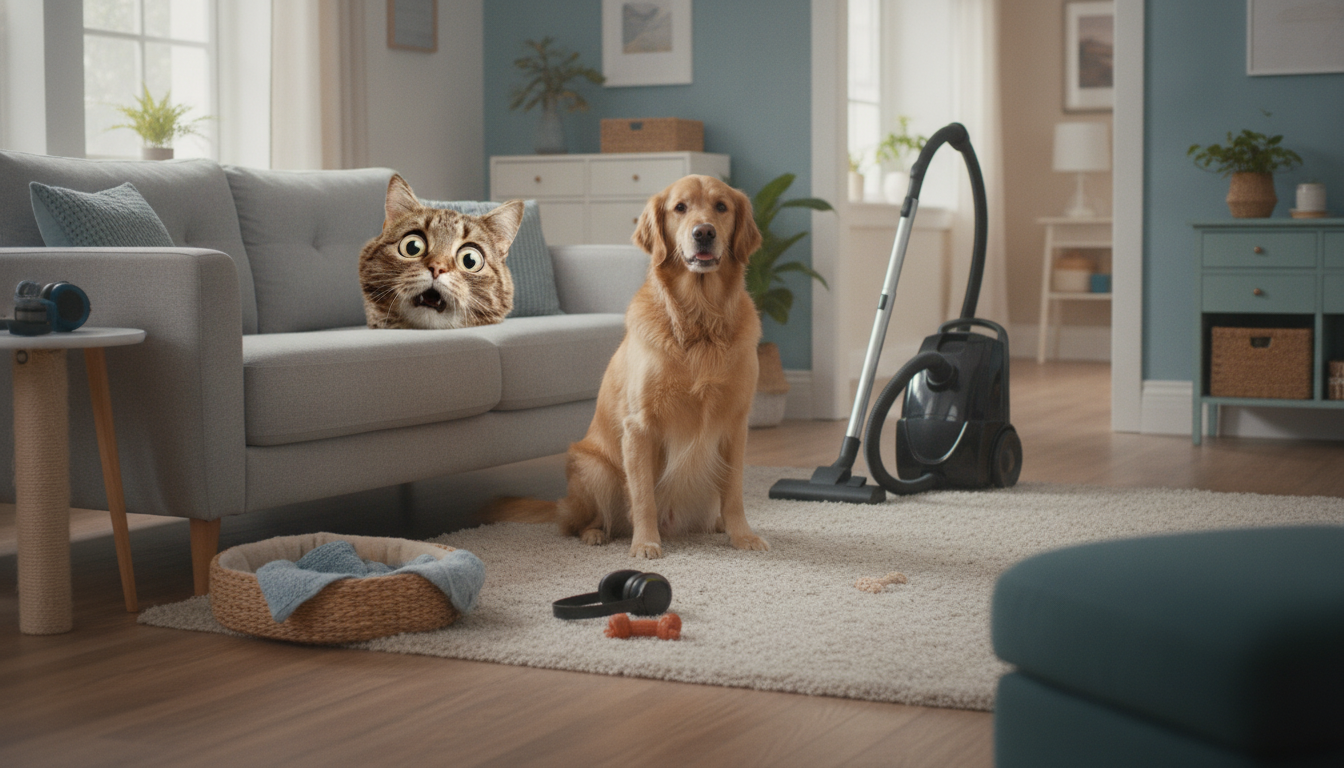
Vacuum cleaners combine loud noise, sudden movement, and unfamiliar scents—an intense mix for many cats and dogs. With a few behavior-friendly steps and a consistent routine, most pets can learn to stay calm (or at least cope) while floors get cleaned. The goal is progress without forcing: protect hearing, reduce startle triggers, and teach predictable cues so the vacuum becomes background noise instead of a threat.
Why vacuums feel scary to pets
What seems like a normal chore can feel overwhelming to an animal. Vacuum fear usually comes from a handful of triggers happening at the same time.
- Sound sensitivity: many pets hear higher frequencies than people and may perceive the motor as painful or alarming.
- Unpredictable movement: the vacuum approaches, retreats, and changes direction quickly—similar to a chasing threat.
- Vibration and airflow: floor vibration, air blasts, and shifting debris can be startling at close range.
- Associations: a single frightening event (slipping, being bumped, loud bang) can create a lasting fear response.
Signs of vacuum stress (and when it’s more than dislike)
Some pets simply leave the room. Others escalate into panic. Knowing the difference helps you choose the safest plan.
- Mild concern: leaving the room, lip licking, yawning, low posture, ears back, tail tucked, pacing.
- Moderate fear: shaking, panting, hiding for long periods, refusing treats, growling, hissing, lunging at the machine.
- High-risk reactions: attempts to escape through doors/windows, redirected aggression, urination/defecation from panic.
- Red flags to get professional help: fear worsening over time, biting, self-injury, or panic that persists long after the vacuum stops.
If fear is intense or escalating, a qualified professional can help you build a plan that protects both your pet’s emotional wellbeing and everyone’s safety. Position statements from the American Veterinary Society of Animal Behavior (AVSAB) offer helpful context on humane, evidence-based behavior support.
Set up a calm environment before turning on the vacuum
Training works best when the environment is set up to prevent overwhelm. Think “reduce intensity first,” then practice at a level your pet can handle.
- Create a safe zone: a bedroom, crate, covered carrier, or closet with bedding, water, and a chew or puzzle toy.
- Sound buffering: close doors, run a fan, white noise, or calm music outside the safe zone to reduce intensity.
- Scent comfort: keep familiar bedding; consider veterinarian-approved calming pheromones for cats/dogs if appropriate.
- Timing matters: vacuum after exercise, play, or a walk so the pet’s baseline arousal is lower.
- Keep the vacuum predictable: clear the floor first so it doesn’t snag, bang, or suddenly change noise.
For general guidance on fear and anxiety in pets, the RSPCA’s pet welfare advice is a solid reference point for recognizing stress signals and choosing kinder handling strategies.
Training plan: teach “vacuum time” as a predictable routine
The most reliable way to reduce fear is gradual desensitization paired with positive reinforcement. The rule that keeps progress steady: don’t increase difficulty unless your pet is relaxed enough to eat, sniff, or engage with you.
- Step 1 (vacuum off): place the vacuum in view; reward calm behavior at a distance where the pet can still eat treats.
- Step 2 (movement, still off): roll it slightly, then stop; reward calm and end the session early.
- Step 3 (sound at low intensity): if possible, turn on in another room briefly; reward calm and return to silence.
- Step 4 (closer exposure): gradually reduce distance over days/weeks—only increase difficulty when the pet is relaxed.
- Pair with a cue: say “vacuum time,” then deliver a high-value treat or start a food puzzle in the safe zone.
- Keep sessions short: multiple 1–3 minute practices beat one long, overwhelming session.
Progress checkpoints for desensitization
| Stage |
Pet behavior goal |
Owner action |
When to move forward |
| Vacuum visible (off) |
Looks or sniffs, then relaxes |
Treat for calm, end session |
Eats treats easily and body looks loose |
| Vacuum moves (off) |
Stays in place or calmly leaves |
Move 1–2 feet, stop, treat |
No freezing, trembling, or fleeing |
| Vacuum sound (far away) |
Can settle, chew, or eat |
Turn on briefly in other room |
Recovers quickly; takes food |
| Vacuum sound (same room, far) |
Remains relaxed at distance |
Vacuum small area, treat intermittently |
No barking/lunging/hiding |
During cleaning: reduce triggers and prevent setbacks
Even with training, day-to-day vacuuming should prioritize safety and keep stress from spiking.
- Choose management over struggle: if the pet panics, separate them in the safe zone rather than forcing exposure.
- Avoid chasing games: never steer the vacuum toward the pet to “show it’s harmless.”
- Keep movement smooth: slow turns and consistent passes can feel less predatory than quick, darting motions.
- Use breaks: pause the vacuum periodically; reward calm, then resume.
- Watch body language: if the pet stops taking treats, stiffens, or fixates, increase distance or end the session.
How to Choose a pet-friendlier vacuum routine
Special notes for cats, small dogs, and noise-sensitive pets
FAQ
Should a pet be kept in the same room during vacuuming to “get used to it”?
Forced exposure often increases fear because the pet feels trapped with a scary trigger. A safer plan is to use a comfortable safe zone during regular cleaning and practice gradual, reward-based exposure at a distance your pet can handle.
How long does it take for a pet to feel calmer around a vacuum?
Some pets improve in a few days, but many need a few weeks of short, consistent sessions. Progress depends on the pet’s sensitivity and history, and some will always prefer relaxing behind a closed door during vacuuming.
What if a pet tries to attack the vacuum cleaner?
Immediately manage for safety by creating distance, using barriers, and ending the session before arousal escalates; avoid punishment, which can intensify the reaction. If aggressive behavior continues, work with a certified trainer or veterinary behaviorist on a structured plan.
Recommended for you









Leave a comment