
Packing the wrong shoes can turn a great itinerary into sore feet, wasted space, and last-minute purchases you didn’t budget for. The goal isn’t to pack more footwear—it’s to pack the right roles: the pair that will carry you through your longest days, plus a smart backup that fits your plans, weather, and luggage limits. Use the framework below to decide quickly, then follow the checklist before every departure.
Before you pick brands or styles, run through five trip realities that usually determine what actually works once you land.
| Trip type | Primary shoe | Secondary shoe (optional) | Avoid packing unless needed |
|---|---|---|---|
| City break (10k–20k steps/day) | Supportive walking sneaker | Packable flats or low-profile loafers | Heavy boots, rigid dress shoes |
| Beach + resort | Water-friendly sandals or slides | Breathable sneaker for outings | Bulky trainers, suede shoes |
| Light hiking + sightseeing | Trail sneaker or light hiking shoe | Simple casual shoe for dinners | New boots that aren’t broken in |
| Cold weather city | Weatherproof boot with traction | Comfort sneaker for indoor days | Smooth soles, thin canvas shoes |
| Business travel | Comfort dress shoe with cushioning | Foldable gym/walking sneaker | Multiple “just-in-case” pairs |
| Theme parks / long standing | Cushioned sneaker with breathable upper | Recovery slide for evenings | Minimal support fashion sneakers |
For most travelers, a two-pair strategy covers comfort, style, and contingency without overstuffing your bag.
Even “great” shoes fail on trips if the fit is slightly off. Do these checks before you mentally lock them into your packing list.
For general foot-health guidance and footwear considerations, reference the American Podiatric Medical Association (APMA).
Weather surprises don’t require an extra pair for every possible scenario—just smarter materials and a simple plan.
If your plans include trails or uneven terrain, the hiking shoe breakdown from REI Co-op Expert Advice can help you decide between trail runners and light hikers.
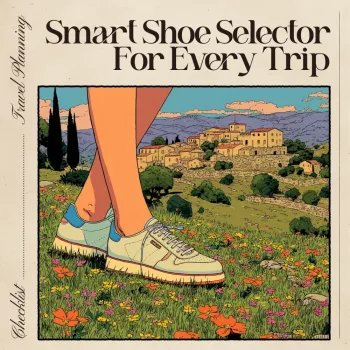
If you want a ready-made system that mirrors the checklist above, Smart Shoe Selector for Every Trip combines guided selection with a practical checklist so shoe choices match the trip rather than “just in case” packing. It’s designed for both printing and digital use, making it easy to reuse for future trips and compare what worked last time.
For travelers who like structured planning tools in general (especially when juggling multiple trip variables), How AI Can Spark Your Next Big Idea is a separate digital workbook that helps organize decisions and generate options when you’re building itineraries, packing systems, or travel routines.
Travel-ready “smart” shoes are typically the pairs that stay comfortable for hours while working across multiple outfits: look for durable cushioning, a stable midsole, a breathable upper, and a toe box that lets toes spread naturally. The most comfortable option depends on your foot shape and walking load, so prioritize fit tests, return policies, and compatibility with your socks or orthotics.
Two pairs is the usual sweet spot: one primary all-day walking shoe plus a lighter backup (dressier or water-friendly). Add a third pair only for consistently wet weather, mixed activities (trail + city + events), or if rotating pairs prevents blisters.





Leave a comment