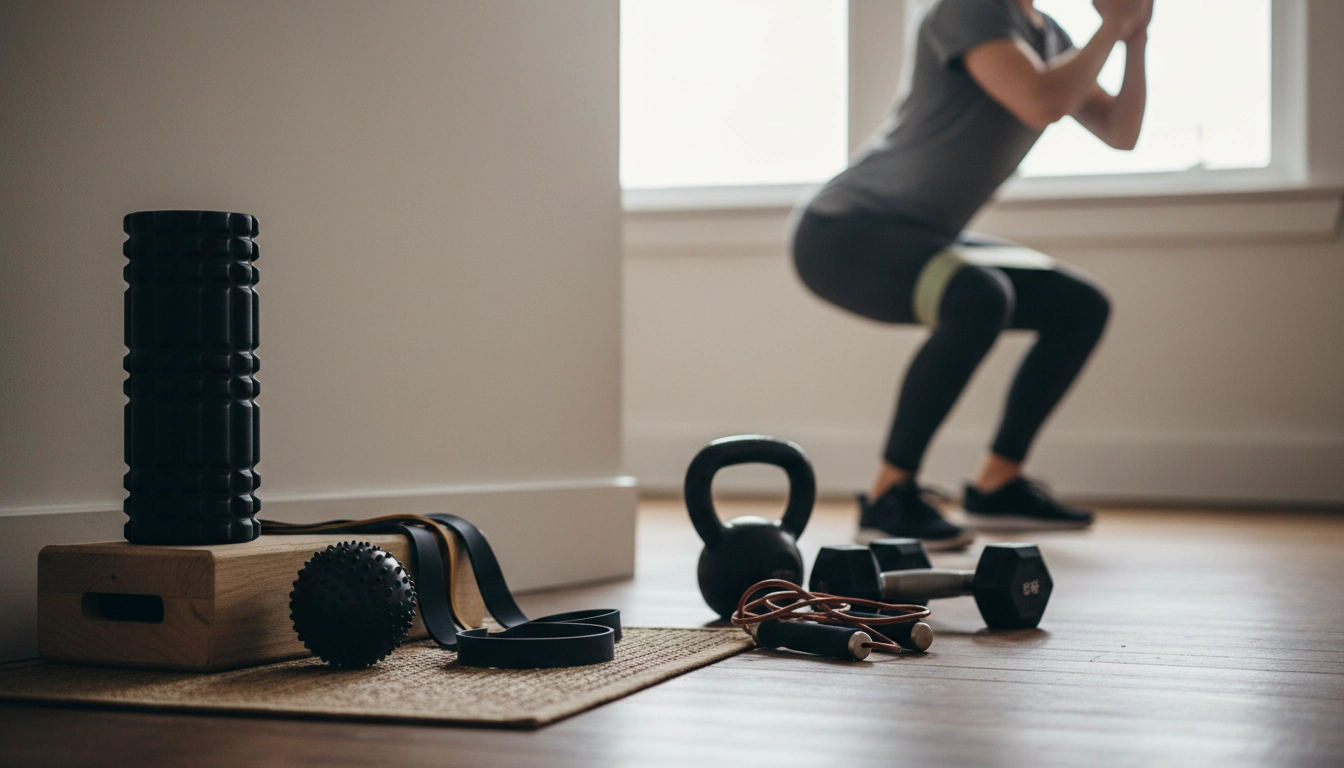
The four pillars of functional fitness are mobility, strength, stability, and conditioning. Together, they support the way your body actually moves in real life—getting up from the floor, carrying groceries, climbing stairs, or keeping balance on an uneven surface.
Mobility is the ability to move joints through a useful range of motion with control. It’s what helps you squat without rounding your back, reach overhead without pinching your shoulders, and rotate comfortably through your hips and spine. Good mobility makes movement feel smoother and reduces compensation patterns that can lead to aches.
Strength is your capacity to produce force—pushing, pulling, hinging, squatting, and carrying. Functional strength prioritizes full-body patterns and positions you use daily, not just isolated muscles. Building strength improves posture, resilience, and confidence when tasks get heavy or awkward.
Stability is the ability to control movement and maintain alignment, especially through your core, hips, knees, shoulders, and ankles. It shows up when you balance on one leg, change direction, or resist twisting under load. Stability supports joint health and helps strength “transfer” into better, safer movement.
Conditioning is your work capacity—how well your heart, lungs, and muscles handle repeated effort. Functional conditioning is less about endless cardio and more about being able to do what life demands without gassing out: walking briskly, carrying things for distance, or moving with steady energy throughout the day.
For practical training ideas that blend these pillars into everyday-ready workouts, visit this functional fitness guide.
For 4 Pillars of Functional Fitness: Mobility to Conditioning, the best answer depends on fit, material, care instructions, and how the product will be used day to day.
Checking those details first helps avoid a poor match and keeps the choice practical after delivery.
A common framework is strength, endurance (cardio), mobility/flexibility, and balance/stability. Functional fitness often emphasizes how these elements work together through real-world movement patterns.







Leave a comment