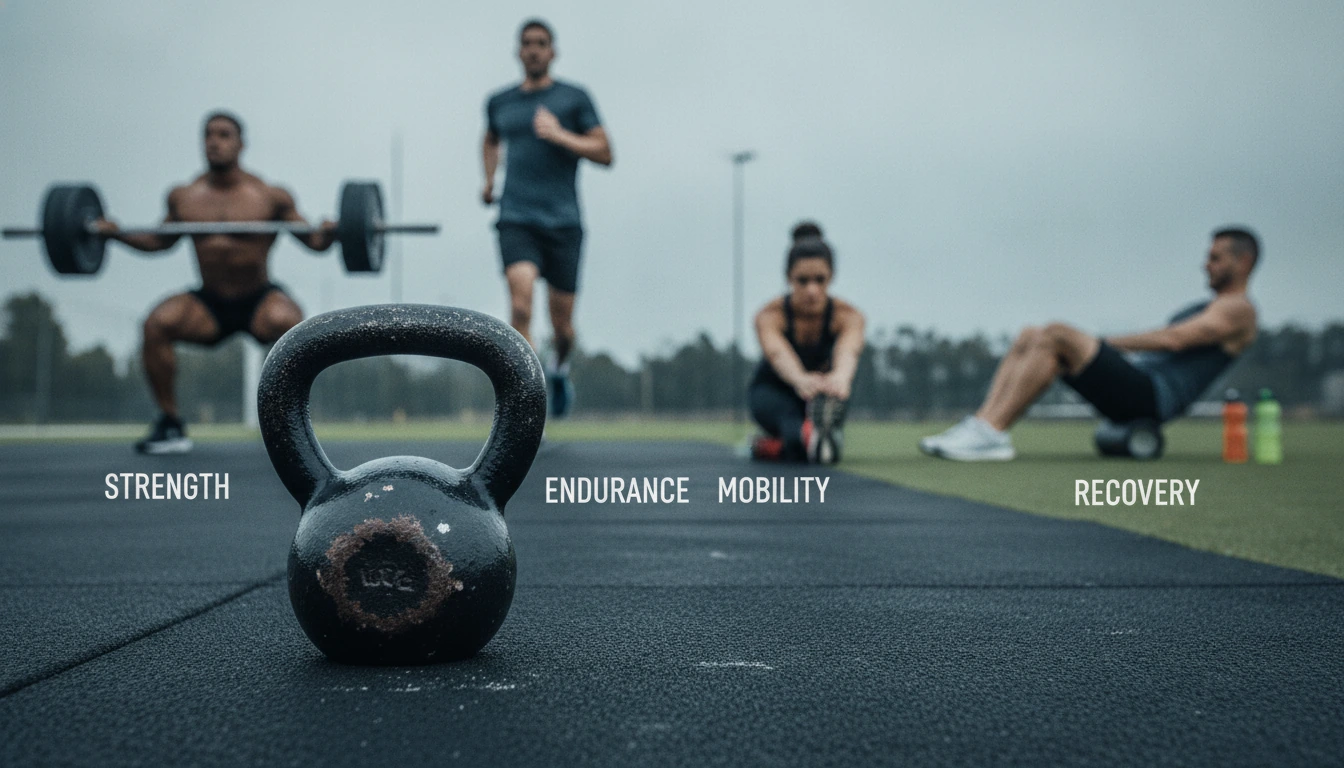
The 4 pillars of fitness are generally considered strength, endurance, mobility, and recovery. Together, they cover how you produce force, sustain effort, move well, and bounce back—so your training supports real life, not just the gym.
Strength is your ability to apply force—picking up a heavy box, carrying groceries, or getting up from the floor. Building it usually means resistance training (weights, bands, or bodyweight) with progressive overload. Strong muscles also support joints, posture, and day-to-day resilience.
Endurance includes both cardiovascular stamina (heart and lungs) and muscular endurance (repeating effort). It shows up when you climb stairs without getting winded or stay energetic through a busy day. Steady-state cardio, interval training, and higher-rep strength circuits can all improve endurance.
Mobility is the ability to move a joint through its full range of motion with control. It’s the difference between “I can touch my toes” and “I can hinge, squat, reach, rotate, and carry without compensation.” Mobility work can include dynamic warm-ups, stretching, joint CARs, and movement-focused strength exercises.
Recovery is where progress actually sticks. Sleep, nutrition, hydration, stress management, and smart programming (rest days, deloads, and varied intensity) help tissues repair and your nervous system reset. Without recovery, strength stalls, endurance dips, and mobility often tightens up.
For a practical, everyday approach that blends these pillars into training that translates to real-world tasks, visit this functional fitness guide.
For 4 Pillars of Fitness: Strength, Endurance, Mobility, Recovery, the best answer depends on fit, material, care instructions, and how the product will be used day to day.
A simple split is 2–3 strength sessions and 2–3 cardio sessions per week, with at least one easier day. Keep harder workouts separated by 24–48 hours when possible, and use low-intensity cardio on strength days if you’re short on time.







Leave a comment