Top-to-Bottom Tips for Effortless Home Cleaning: Dusting Routine and AI-Powered Organization
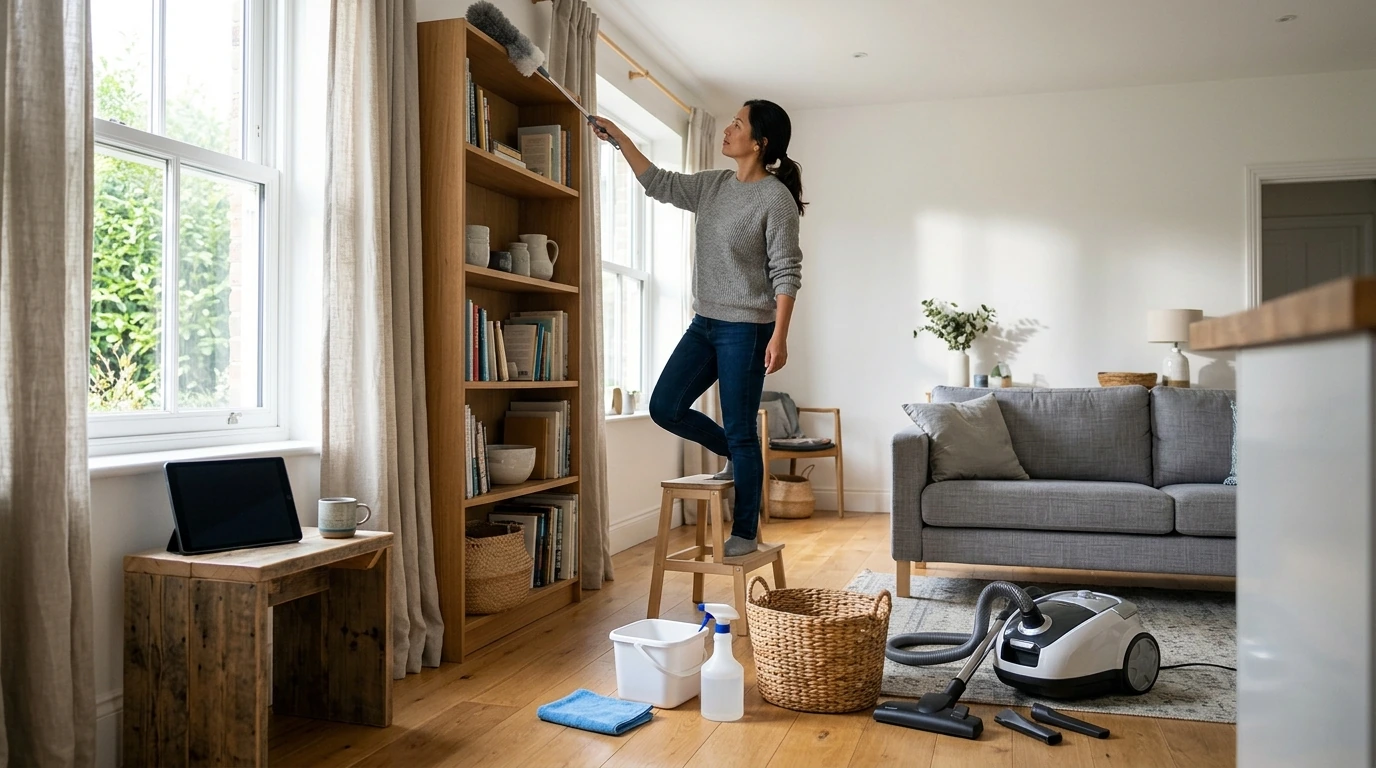
A top-to-bottom approach prevents rework, cuts down on airborne dust, and turns cleaning into a predictable routine. Instead of bouncing around the house and re-dusting what you just cleaned, you follow a simple gravity-friendly sequence: high surfaces first, floors last. Pair that with a few AI-assisted planning habits, and clutter is less likely to creep back in between deep cleans.
Why top-to-bottom works (and what it solves)
Dust and debris don’t disappear when they’re disturbed—they move. Cleaning top-to-bottom uses that to your advantage, so you aren’t accidentally undoing your own work.
- Stops “double cleaning.” Dust falls from ceiling fans and shelves onto lower surfaces. Cleaning high areas first means anything that drops gets handled later in the sequence.
- Reduces dust redistribution. A microfiber-first approach traps particles better than feather dusting, and targeted vacuuming picks up what falls before it gets walked around.
- Creates a repeatable sequence. A consistent order is easier to maintain than improvising room-by-room and forgetting key dust magnets.
- Supports allergy-aware routines. High surfaces, textiles, and airflow pathways (vents, fans, blinds) often hold the most irritating buildup. The EPA’s guidance on indoor air quality is a helpful reference for keeping particles down over time.
For broader health-focused cleaning guidance, the CDC’s cleaning and disinfecting recommendations can help clarify when routine cleaning is enough versus when disinfection matters.
Set up a 10-minute prep that makes cleaning faster
Most “long cleaning sessions” feel long because of starts and stops—hunting for tools, moving clutter, switching rooms mid-task. A quick setup removes that friction.
- Build a small top-to-bottom kit. Microfiber cloths, an extendable duster, a vacuum with attachments, gentle all-purpose spray, a glass cloth, and a small bucket with warm water cover most surfaces.
- Vent briefly (when outdoor air quality is good). A short window opening can reduce lingering odors and help the space feel fresher before the final vacuum pass.
- Start laundry early. Throw blankets, pillow covers, and washable slipcovers quietly collect dust. Washing them while you clean surfaces prevents “instant re-dusting.”
- Declutter in quick passes. Use one basket per room: sweep counters, nightstands, and floors into that basket and keep moving. Sorting comes later, after the visible cleaning is done.
The expert dusting routine: always high to low
A reliable order matters more than perfection. The goal is to trap dust, not launch it into the air and chase it around the house.
Top-to-bottom sequence by surface
| Step |
What to clean |
Best tool |
Common mistake to avoid |
| 1 |
Ceilings, corners, vents (outer covers) |
Extendable duster + microfiber |
Skipping corners so dust falls later |
| 2 |
Ceiling fans, light fixtures |
Damp microfiber cloth |
Dry dusting that sprays particles |
| 3 |
Curtain rods, blinds top edge, tall furniture tops |
Microfiber + vacuum brush |
Forgetting window coverings (major dust holders) |
| 4 |
Shelves, electronics exteriors, counters |
Microfiber + gentle spray |
Spraying directly onto electronics |
| 5 |
Baseboards, floor edges, under furniture reach areas |
Vacuum crevice tool |
Mopping before vacuuming |
| 6 |
Floors (all rooms) |
Vacuum, then mop (if needed) |
Fast vacuum passes that miss embedded dust |
Room-by-room checklist that follows the same order
Keep homes dust-free longer: small habits with big payoff
- Control what comes in. Doormats outside and inside plus a quick shoe policy cuts tracked-in particles dramatically.
- Change HVAC filters on a schedule. Homes with pets, allergies, or heavy HVAC use typically benefit from more frequent changes. The EPA’s Indoor Air Quality resources offer practical guidance for reducing indoor particles.
- Vacuum textiles monthly. Upholstery and mattresses act like dust reservoirs; a monthly pass helps keep the whole house feeling cleaner.
- Use one-touch storage for hotspots. Mail, chargers, and toys need the easiest possible “drop zone.” If it takes more than one step, it won’t stick on busy days.
- Do a 3-minute nightly reset. Clear surfaces, remove cups/plates, toss obvious trash, and stage laundry. Weekly cleaning stays light because the house never fully “slides.”
AI-powered organization: turn routines into a simple system
Make it effortless with a ready-to-use digital guide
FAQ
How often should dusting be done for a dust-free feel?
A light top-to-bottom dusting once a week keeps most homes feeling consistently clean. Add quick midweek touch-ups for high-use areas, and increase frequency if you have pets, allergies, or lots of textiles.
Is it better to dust dry or with a damp cloth?
Dry microfiber works well for quick passes and delicate surfaces, while a slightly damp microfiber is better for trapping dust on fans, shelves, and fixtures. Avoid soaking surfaces, and follow up with vacuuming to capture what falls.
What’s the fastest way to maintain a clean home between deep cleans?
Do a short daily reset (clear surfaces, dishes, trash, and a quick laundry sweep) plus a simple weekly rotation so no task gets overwhelming. AI-assisted checklists and recurring reminders help keep each session small and consistent.
Recommended for you






Leave a comment