100 Proven Ways to Relax Your Mind: A Printable Guide for Stress Relief, Mindfulness, and Self-Care
Mental tension builds quietly—tight shoulders, racing thoughts, shallow breathing, and a constant sense of urgency. Relaxing the mind isn’t a single trick; it’s a toolkit of small, repeatable practices that calm the nervous system, restore focus, and make stress feel more manageable. The ideas below are organized so it’s easy to pick what fits the moment, track what helps, and create a simple routine you can print and keep nearby.
What “relaxing your mind” actually means
- Downshifting the stress response: moving from fight-or-flight toward rest-and-digest using breath, gentle movement, and cues of safety (soft gaze, relaxed jaw, slower exhale).
- Reducing cognitive load: fewer open loops—unfinished tasks, mental reminders, too many decisions—often equals less background anxiety.
- Training attention: mindfulness isn’t “no thoughts”; it’s noticing thoughts without getting pulled into them.
- Creating recovery micro-moments: short breaks throughout the day keep stress from stacking into irritability, fatigue, or burnout.
If you want the science behind common techniques, authoritative overviews from the American Psychological Association, the National Center for Complementary and Integrative Health, and the Cleveland Clinic are useful references.
Quick resets for the next 2 minutes
When stress spikes, start with something short and physical. These options are designed to work even when you don’t feel “in the mood” to relax.
- Physiological sigh: inhale through the nose, add a short top-up inhale, then exhale slowly through the mouth (repeat 2–3 times).
- Box breathing: inhale 4, hold 4, exhale 4, hold 4 for 4 rounds.
- 5–4–3–2–1 grounding: name 5 things seen, 4 felt, 3 heard, 2 smelled, 1 tasted.
- Relax the jaw and tongue: tongue lightly behind upper teeth; unclench molars; soften the face.
- Peripheral vision reset: widen your gaze to include the edges of the room for 30–60 seconds.
- Cold splash or cool compress: cool water on the face or a cool pack at the back of the neck to reduce arousal.
- Shoulder drop + long exhale: raise shoulders on inhale; drop them as you lengthen the exhale.
Fast options by situation
| Situation |
Try this |
Why it helps |
| Racing thoughts |
Box breathing (4 rounds) |
Creates a steady rhythm and reduces mental noise |
| Body feels tense |
Progressive muscle release (hands, shoulders, jaw) |
Signals safety through physical relaxation |
| Overstimulated |
Peripheral vision + long exhale |
Shifts attention away from threat scanning |
| Restless energy |
30–60 seconds of brisk walking or stairs |
Uses movement to discharge stress hormones |
| On the verge of overwhelm |
5–4–3–2–1 grounding |
Anchors attention to the present moment |
Relaxation habits that stick (10–20 minutes)
These are longer practices that tend to work best when you do them consistently—especially as a daily “reset” before stress builds too high.
- Mindfulness check-in: set a timer for 10 minutes; notice breath sensations; label thoughts as “thinking,” then return to breath.
- Guided body scan: move attention from feet to head, softening each area without forcing change.
- Gentle yoga or mobility flow: slow nasal breathing; prioritize ease over intensity.
- Journaling to unload: write worries for 5 minutes, then list 3 next steps (even tiny ones) to close mental loops.
- Nature exposure: a slow outdoor walk with attention on sound, wind, and light.
- Soothing music routine: reserve one playlist only for winding down to strengthen the association.
- Creative reset: coloring, knitting, sketching, or simple crafts to occupy the mind without pressure.
Self-care that reduces stress at the source
Some “relaxation” works because it removes the fuel that keeps the stress response running. These changes are small, but they compound.
- Sleep protection: keep a consistent wake time, dim lights 60 minutes before bed, and use a device cutoff when possible.
- Caffeine boundaries: avoid late-day caffeine; pair morning coffee with water and food to reduce jitters.
- Blood sugar steadiness: regular meals/snacks with protein and fiber to prevent mood spikes.
- Decision reduction: preset outfits/meals, keep a default grocery list, automate recurring tasks.
- Connection: low-pressure contact (voice note, walk-and-talk, shared meal) to reduce isolation.
- Environment cues: declutter one small area; reduce visual noise; add a calming scent or plant.
- Time buffers: add 5–10 minutes between commitments to stop the day from feeling like a sprint.
How to choose the right technique when stress and anxiety hit
- Match the tool to intensity: for high arousal, start with breath + grounding before reflective practices.
- If thoughts are loud, use structure: timed breathing, a guided audio, or a written checklist reduces mental effort.
- If the body is restless, move first: walking, stretching, or shaking out arms/legs can make stillness possible afterward.
- If the body feels heavy or shut down: use gentle activation—sunlight, a warm drink, a brief tidy-up, or a supportive call.
- Build a personal “top 5”: pick five practices that reliably help and keep them visible (a phone note or printout).
- Track what works: note the technique, stress level before/after (1–10), and the time of day to spot patterns.
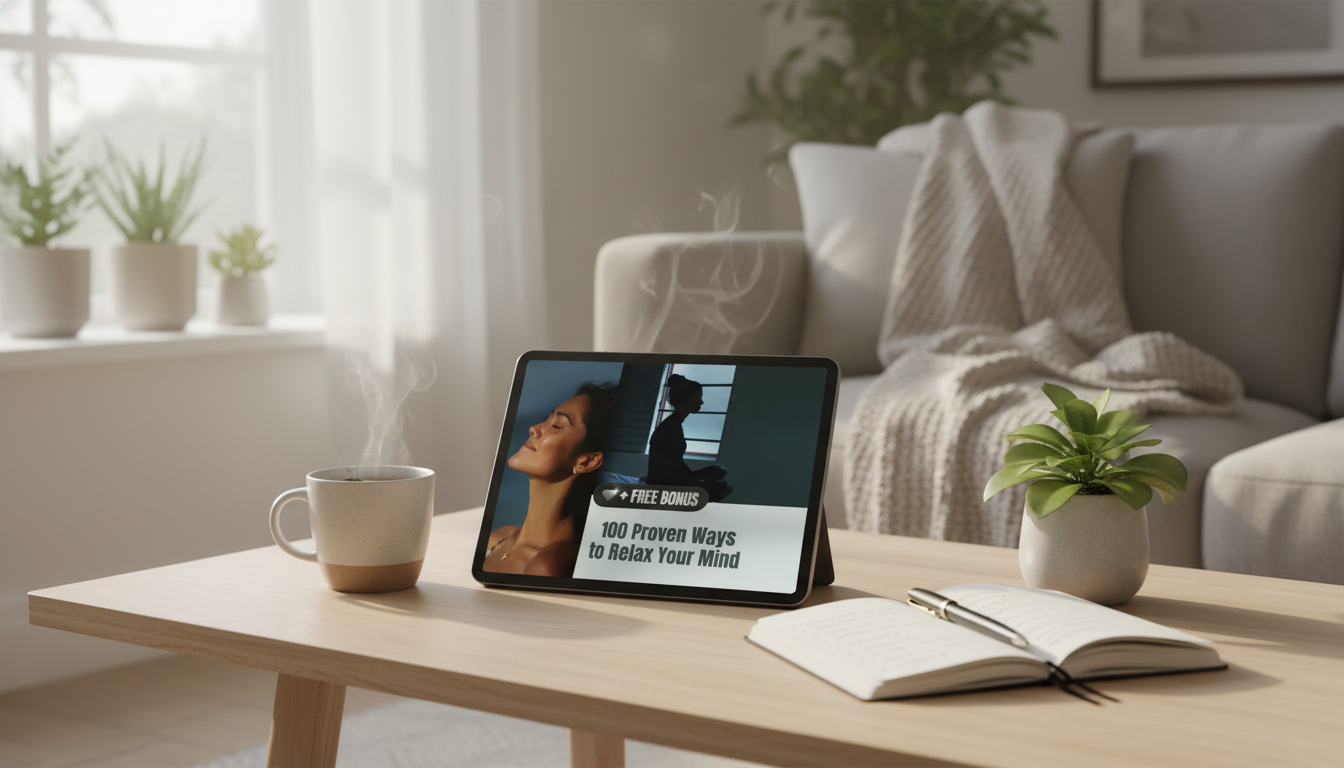
How to Choose (and print) your “100 ways” list
A simple weekly plan to make relaxation automatic
FAQ
How to relax mind from stress
Try a 90-second sequence: take 2–3 physiological sighs, do a quick 5–4–3–2–1 grounding scan, then write down one small next step to close an open loop. Use the breathing when your body feels activated, grounding when you feel scattered, and the next step when worry is driven by unfinished tasks.
How to relax mind from stress and anxiety
Stress often responds well to fixing or finishing something; anxiety often benefits from calming the body first so thoughts don’t spiral. Start with slow exhale breathing or progressive muscle release, add gentle movement if you feel restless, then use mindfulness or journaling to observe worries without feeding them; steady sleep and earlier caffeine timing can make these tools work better.
Recommended for you












Leave a comment