
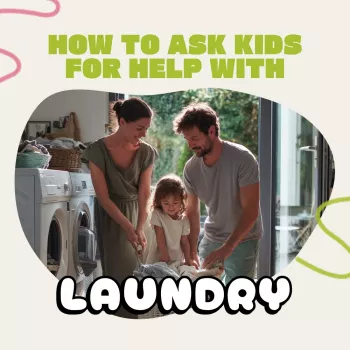
Kids can help with laundry much earlier than most families expect—when the tasks match their motor skills, attention span, and safety needs. The safest jobs are “dry,” low-risk steps (sorting, matching, folding) and supervised routines that keep children away from hot surfaces, chemicals, and heavy lifting.
Good toddler laundry chores are quick and highly visual. Try having them put dirty clothes into a hamper, hand you socks one at a time, or match pairs of socks from a small pile. They can also “feed” the washer by dropping in lightweight items like washcloths while an adult controls buttons, detergent, and the lid/door.
Avoid: detergent pods, bleach, stain removers, reaching into machines, or carrying baskets. Keep them away from cords, doors, and spinning cycles.
Preschoolers can sort by color (lights/darks) or by owner (mom/dad/kids) using labeled bins. They can help turn items right-side-out, fold washcloths, and stack towels. Another age-appropriate job: moving clean clothes from a basket to the right bedroom, one small bundle at a time.
Avoid: measuring detergent, starting machines without an adult nearby, or unloading the dryer if items are hot.
Most elementary kids can fold shirts and pants, roll pajamas, and put away their own clothing using a simple drawer system. With coaching, they can set a timer, transfer clothes from washer to dryer (if not hot/heavy), and check pockets before washing. Older elementary kids may be ready to measure detergent and start a cycle, but only with clear rules and adult approval.
Use a short checklist, a regular laundry day, and a defined “kid zone” (folding area) away from machines and products. For step-by-step routines and ready-to-use checklists, see the full guide: Kids & Laundry: Clear Requests, Routines & Checklists.
Start with one easy category (washcloths or towels), demonstrate once, then let “good enough” count. Keep sessions short (5–10 minutes) and use the same folding spot and order each time so it becomes automatic.










Leave a comment