
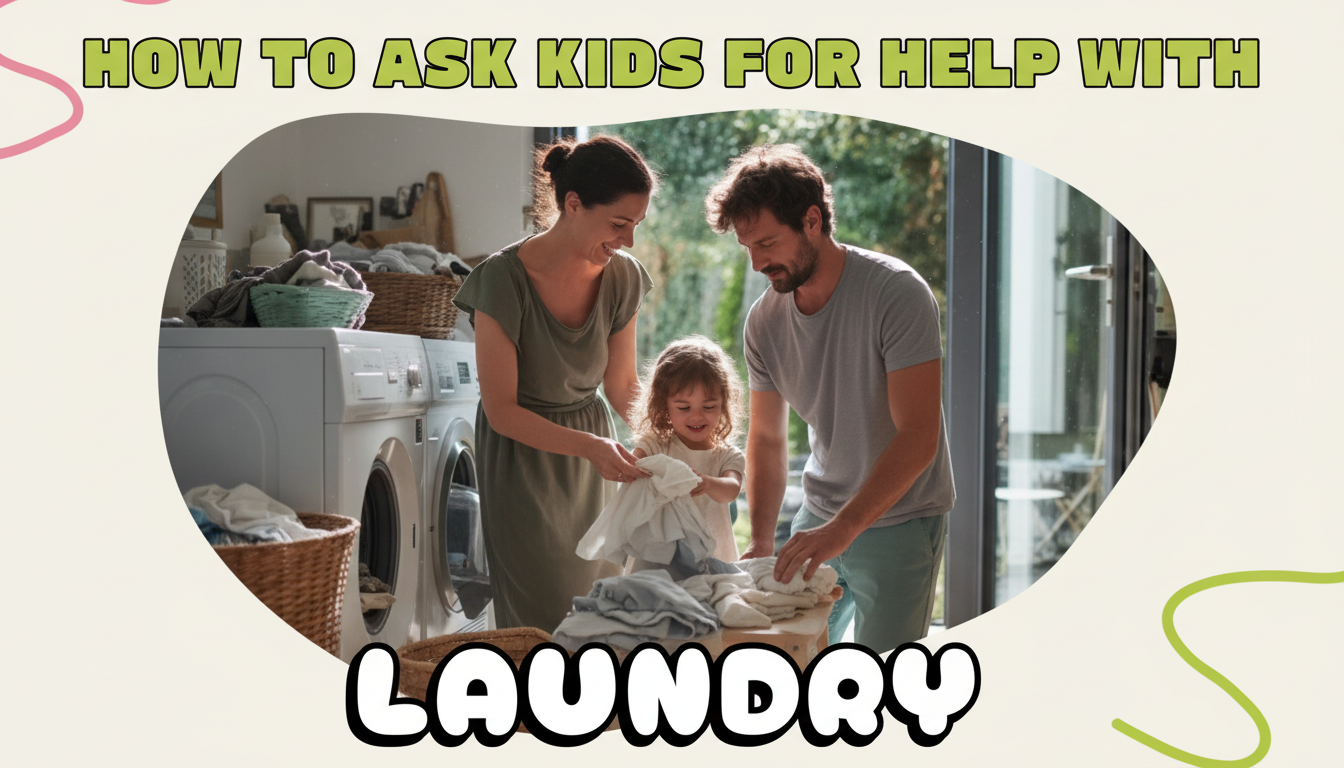
Laundry turns into a power struggle when the request feels endless, unclear, or too easy to “fail.” A general ask like “help with laundry” leaves kids guessing what to do, how long it will take, and whether they’ll get corrected along the way. A specific, bite-size task (“match socks for 3 minutes”) is far easier to accept.
Another issue: laundry is repetitive and doesn’t have an obvious finish line. Kids tend to cooperate best when there’s a visible endpoint (one basket, one pile, ten items) and a short timer. Finally, perfection pressure can shut down effort—if every towel gets refolded or every shirt gets re-sorted, the message becomes “don’t bother.” Consistency helps too: predictable routines reduce negotiation because the expectation isn’t up for debate every day.
Before asking for more cooperation, decide what “help” actually looks like in your household. Pick 3–5 recurring tasks kids can truly own, such as sorting, moving loads, matching socks, putting away, wiping the washer rim, or setting timers. Ownership matters: the task is “theirs,” not “helping you.”
Separate non-negotiables from flexible areas. Non-negotiables usually include safety rules (no climbing into machines), detergent handling, and any stain or bleach products. Flexible areas might include fold style or how drawers are organized. A useful boundary is “when/then”: “When the towels are folded, then you pick the music for the next load.” For the first week, keep it intentionally easy—small wins build momentum faster than big lectures.
Kids respond best to a request that feels clear, brief, and doable. Start with connection, then a one-sentence task: name + eye contact + request. Keep your tone neutral and confident, like you’re calling the next play.
If you expect resistance, make the first step tiny: “Bring the hamper to the hallway.” Once that’s done, the next instruction lands better because the child is already in motion.
Matching the task to the child’s stage prevents frustration for everyone. Toddlers and preschoolers do best with “yes jobs” that feel real but stay safe: carrying soft items, matching colors, putting socks in a bin, or turning clothes right-side out with help. Elementary kids can sort by person, fold simple items, set timers, and put away into labeled drawers. Tweens and teens can learn to run a full load with supervision, practice stain basics, and manage their own weekly laundry day.
Avoid tasks involving detergent pods, bleach, or hot irons without close adult oversight and clear rules. For laundry safety guidance, the American Cleaning Institute offers family-friendly recommendations.
| Age range | Best-fit tasks | Make it easier | Adult checks |
|---|---|---|---|
| 2–4 | Put socks in a basket, carry washcloths, match colors | Use a picture label on bins; make it a “treasure hunt” | Keep detergents out of reach; supervise near machines |
| 5–7 | Match sock pairs, fold towels, sort by person | Use 2–3 sorting piles only; timer for 3–5 minutes | Check for missed pockets; confirm items belong to the right person |
| 8–10 | Put away clothes, fold shirts, start learning machine buttons | Labeled drawers; simple fold method; checklist on wall | Verify settings and detergent amounts |
| 11–13 | Run a load with help, pre-treat stains, track laundry day | Written steps; preset machine settings; reminder alarm | Spot-check stain products and water temperature |
| 14+ | Own personal laundry, linens rotation, teach a sibling | Weekly schedule; hamper system; “reset” routine for laundry area | Safety review; occasional quality check (odors, missed items) |
Predictability lowers pushback because kids aren’t constantly being surprised by demands. Attach laundry to an existing anchor: after-school snack, before screen time, or after dinner cleanup. Keep the flow the same each time—collect → sort → wash → dry → fold → put away—so kids learn what’s coming next.
On busy days, use micro-jobs: one basket only, or one person’s clothes only. End with a visible win: an empty hamper, a cleared couch, or a “done” bin returned to the closet. That “we finished” feeling matters, especially for kids who struggle with follow-through.
For broader behavior and motivation strategies, the Child Mind Institute has practical guidance that aligns well with routine-based chores.
If you want a family-friendly framework for building independence over time, HealthyChildren.org (American Academy of Pediatrics) is a solid reference for age-appropriate responsibility.
Preschoolers can help with simple, safe tasks like matching socks or carrying soft items. Increase responsibility gradually as skills and attention grow, and add clear safety rules when kids start using machines.
Use micro-tasks (2–5 minutes), a timer, and a visible finish line like one pile or ten items. Offer two choices and stop while it’s still going well so cooperation becomes a habit.
Stay calm, restate the single task, and use a predictable “when/then” boundary. Shrink the task to a starter step and give effort-based praise once they begin; keep consequences related to the routine.









Leave a comment