
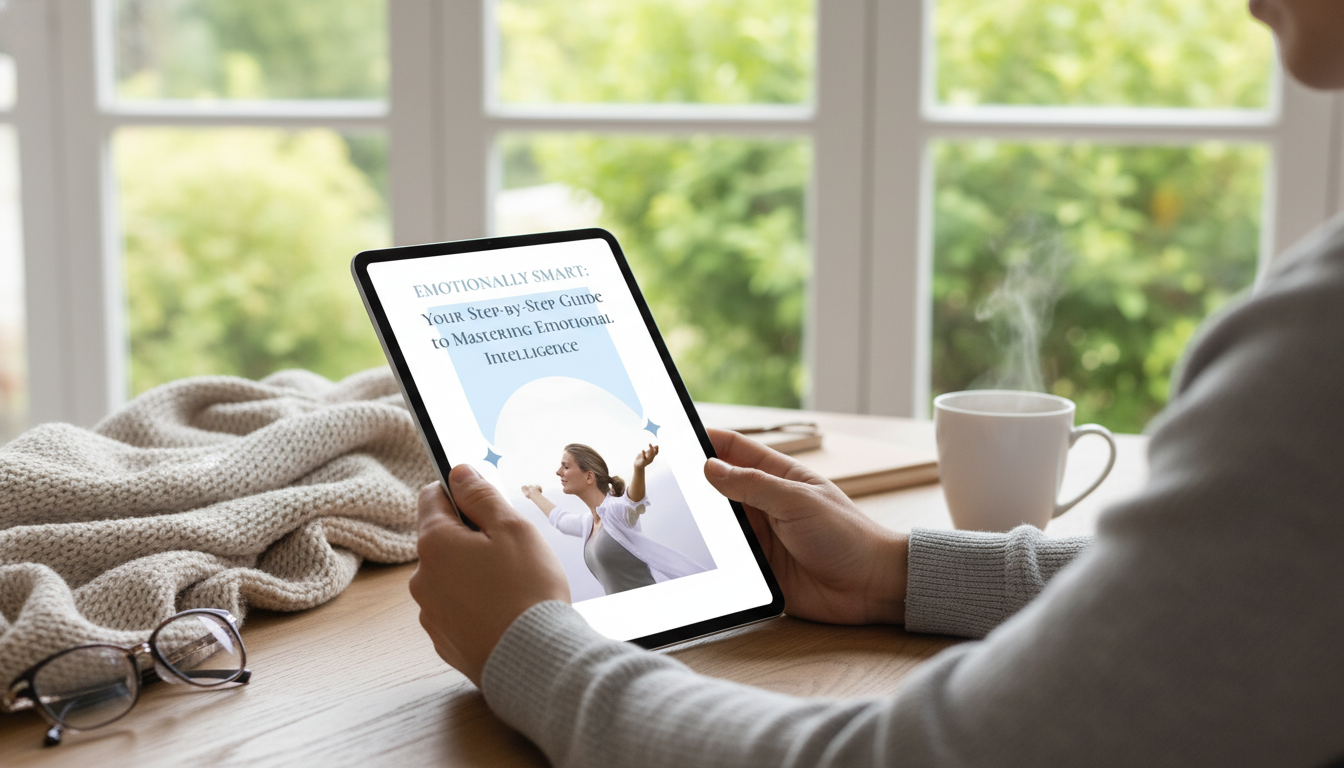
Emotional intelligence is a set of practical skills: noticing emotions as they arise, naming them accurately, and choosing a response on purpose instead of running on autopilot. It’s less about having “perfect” emotions and more about building reliable options when emotions show up—at work, at home, and in the middle of stress.
Common misconceptions can slow progress. Emotional intelligence isn’t suppressing feelings, forcing positivity, or avoiding conflict. It also isn’t “being nice” at the expense of honesty. In real life, emotionally intelligent behavior often looks like clearer boundaries, calmer tone, and repair after a misstep.
A realistic goal is not perfection. Progress usually looks like fewer reactive moments, shorter recovery time after a flare-up, and more constructive conversations—even when the situation stays hard.
| Skill | What it looks like | Simple practice (5–10 minutes) |
|---|---|---|
| Self-awareness | Recognizing what is felt and why | Name the emotion + rate intensity (0–10) + identify the trigger |
| Self-regulation | Pausing before reacting | 90-second reset: slow breathing + relax jaw/shoulders + choose one next action |
| Empathy | Understanding others’ feelings and needs | Reflect back: “It sounds like you felt ___ because ___.” Ask one clarifying question |
| Social skills | Communicating clearly and repairing after conflict | Use a 2-sentence repair: “I see how that landed. Next time I will ___.” |
| Motivation | Staying aligned with values under stress | Values check: pick one value today + one behavior that proves it |
Emotions often appear in the body before they show up in words. A tight chest, heat in the face, clenched hands, or a buzzing restlessness can be an early signal that something needs attention. Treat these sensations like a notification: not an emergency, but useful information.
Next, practice precise labeling. “I’m fine” doesn’t help much; “irritated” vs. “angry,” “disappointed” vs. “ashamed,” or “anxious” vs. “overstimulated” can change what you do next. Accuracy supports regulation because it narrows the problem.
To find patterns, track a few simple variables: time of day, sleep quality, hunger, overstimulation, and specific contexts or people. Many “personality problems” are actually predictable strain points.
Quick exercise: three times per day, pause for 30 seconds and ask: “What am I feeling? Where do I feel it in my body? What do I need?”
Reactivity usually has early warning signs: racing thoughts, urgency, a defensive tone, fast typing, interrupting, or the sense that you must respond immediately. The goal is to catch the moment before the moment catches you.
Create a pause plan you can repeat anywhere: 4–6 slow breaths, a sip of water, a short walk, or a simple line such as, “Give me a moment to think.” The pause is not avoidance; it’s a deliberate buffer that keeps emotion from choosing your actions for you.
Separating emotion from action is the key move. Feelings are valid data. Actions are decisions. Even a small pause helps bring your values back online. For evidence-based relaxation options, see the National Institutes of Health overview of relaxation techniques.
Mini-practice: rehearse your pause during low-stakes moments (minor frustration, small delays) so it’s available when stakes are high.
Reactivity often spikes when an interpretation hardens into “truth.” For example: “They don’t respect me” is a story; “They missed the deadline again” is an observable fact. Stories can be meaningful, but they also fuel intensity.
Watch for common thinking traps: mind-reading (“They did it on purpose”), catastrophizing (“This will ruin everything”), and all-or-nothing labels (“They never listen”). Reframing doesn’t mean talking yourself out of your feelings; it means widening the lens so you have more choices.
A balanced alternative might sound like: “This is hard, and I can handle the next step,” or “I don’t like this, and I can ask for what I need.” For a deeper overview of emotion processes and regulation, the American Psychological Association’s page on emotion is a helpful reference.
Practice: write (1) the situation, (2) the story you’re telling yourself, (3) the emotion, and (4) one more plausible explanation.
Empathy also improves accuracy. Instead of guessing, reflect and ask one clarifying question. Greater Good Magazine’s research-based guides on empathy offer practical ways to strengthen this skill without taking on responsibility for someone else’s emotions.
| Must-have | Why it matters | What to look for |
|---|---|---|
| Clear sequence | Builds skills in the right order | Weekly or daily steps with specific actions |
| Prompts and worksheets | Turns insight into behavior change | Reflection questions, tracking pages, scripts |
| Real-life scenarios | Improves transfer to daily situations | Examples for work, relationships, conflict |
| Practice plan | Consistency beats intensity | Short routines that repeat and compound |
Noticeable changes often show up within a few weeks of consistent daily practice, especially around pausing and faster recovery. Deeper habit change usually builds over months as you repeat the same small skills in real situations.
A brief check-in works well: name the emotion, locate it in the body, identify the trigger, and choose one regulated next action. Done in under a minute, this builds self-awareness and makes self-regulation easier later.
Yes—self-regulation reduces escalation, empathy improves understanding, and clear scripts and boundaries keep the conversation respectful and outcome-focused. Over time, faster repairs also reduce lingering tension and defensiveness.









Leave a comment