
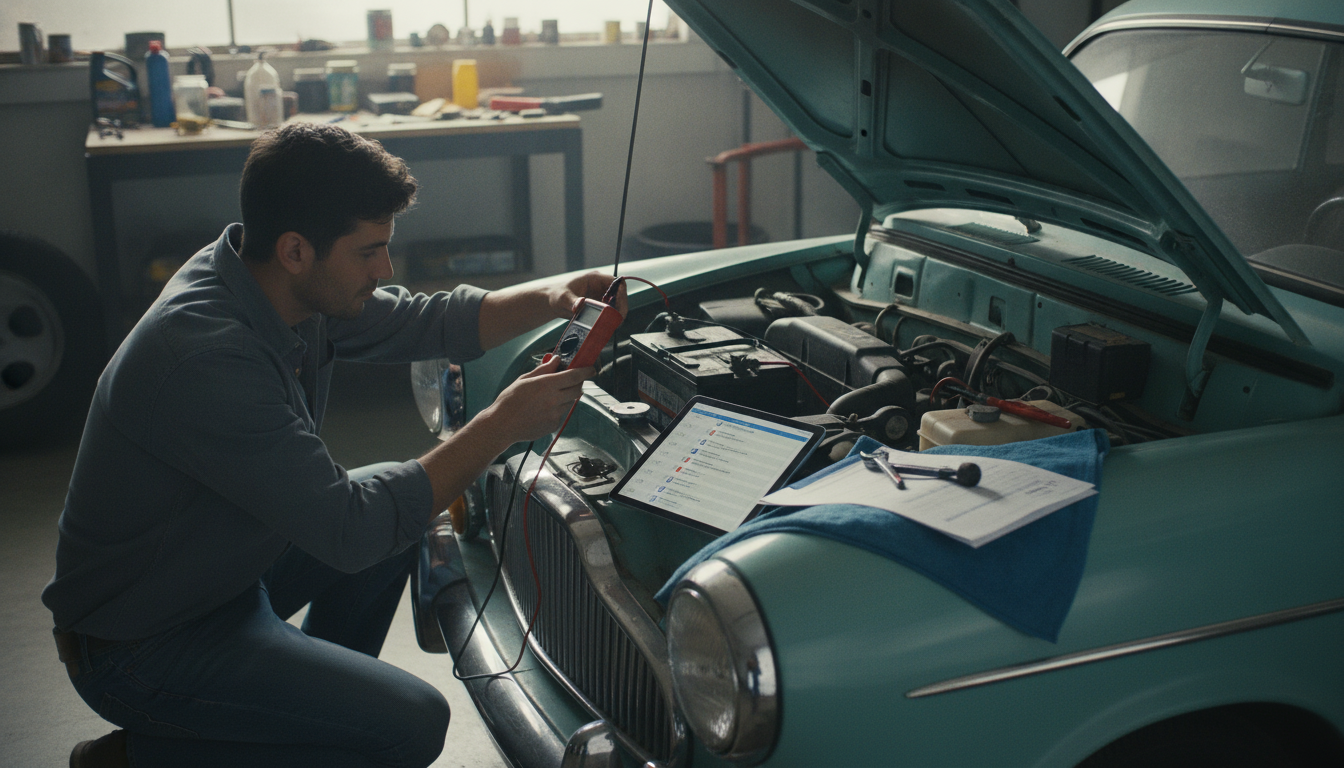
A weak battery can look like a starter problem, an alternator issue, or a random electrical glitch. A short, repeatable check helps spot common warning signs early and reduces the chance of a no-start situation. Use the steps below as a simple routine, then record results so changes over time are obvious. For more guidance, see [PDF] DJI Mini 4K – User Manual.
This quick routine is meant to catch the most common battery-related problems without turning your driveway into a diagnostic bay. It’s especially useful when starting feels “a little slower than normal,” headlights seem dimmer than usual, or you’ve needed a jump recently. For further reading, see Consumer Reports’ Guide to Car Maintenance.
If your results are borderline, trend tracking helps: one reading can mislead, while a pattern across weeks makes the real issue clearer.
Before touching anything, prioritize safety. Batteries can vent flammable gas, and corrosion residue can irritate skin and eyes.
| Item | Purpose | Optional? |
|---|---|---|
| Gloves & eye protection | Reduce risk from acid and debris | Recommended |
| Digital multimeter | Measure resting and cranking voltage | Optional but helpful |
| Wire brush/terminal cleaner | Remove corrosion for better connection | Optional |
| 10 mm/appropriate wrench | Check clamp tightness | Optional |
| Baking soda + water | Neutralize corrosion on terminals (external only) | Optional |
A swollen case often points to internal damage or heat stress. Leaks and cracks are immediate “do not drive on this battery” signs.
| Check | Typical observation | What to do next |
|---|---|---|
| Resting voltage | Around 12.6 V for a fully charged healthy battery | If notably lower, charge the battery and re-test; repeated low readings suggest aging or a drain |
| Cranking voltage | Brief drop during start, then recovery | If the voltage drops sharply or the starter drags, inspect connections/cables and consider a load test |
| Engine running voltage | Often in the mid-13 V to mid-14 V range | If too low/high or unstable, have the alternator/charging system tested |
| Terminals | Clean, tight, minimal corrosion | If corrosion returns quickly, check for loose clamps or damaged terminals |
| Symptom | Likely cause | Simple next step |
|---|---|---|
| Single click/no crank | Loose terminal or low battery | Inspect/tighten terminals; measure resting voltage |
| Rapid clicking | Low battery charge | Charge battery; re-test resting voltage |
| Slow crank | Aging battery or high resistance cables | Clean terminals; measure cranking voltage; consider load test |
| Starts, then stalls/acts erratic | Charging or electrical issue | Check engine-running voltage; scan for codes if available |
When you reach any of these points, a professional load or conductance test can quickly confirm whether the battery is actually failing or if another component is responsible. For service/testing overviews, see AAA’s battery service and testing.
| Feature | Why it matters |
|---|---|
| Date + mileage fields | Helps link battery condition to driving patterns and time |
| Resting/cranking/charging sections | Prevents missing a key step and supports troubleshooting |
| Pass/monitor/act labels | Makes next steps obvious without guessing |
| Notes area | Captures symptoms like slow crank, clicking, or accessory flicker |
A fully charged battery often reads around 12.6V at rest, while lower readings can indicate a lower state of charge or possible aging. Temperature and recent driving/charging can affect numbers, so if the reading is borderline, recheck after a full charge or confirm with a professional load/conductance test.
Yes—surface charge, intermittent internal faults, and temperature swings can make a battery appear fine at one moment and struggle later. Starting performance can also remain acceptable even as reserve capacity drops, so recording trends and retesting after a few days can reveal decline.
Checking every few months (and during seasonal transitions) is a practical routine for most vehicles. Test more often for older batteries, extreme climates, or cars that sit for long periods between drives.












Leave a comment