
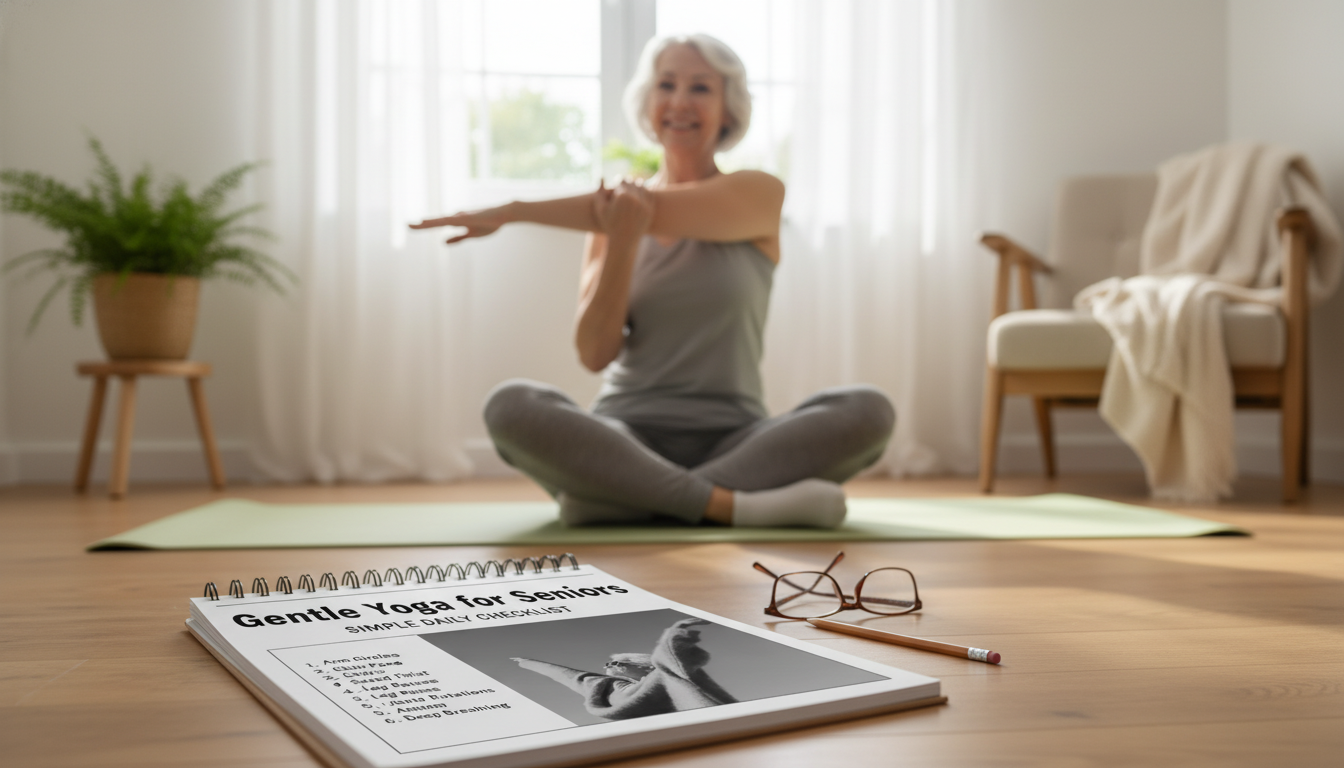
A simple, repeatable yoga routine can support steadier balance, looser joints, calmer breathing, and better day-to-day comfort. The key for seniors is keeping movements slow, using sturdy support (chair, wall, counter), and focusing on how things feel rather than how far you can stretch. Below is a safe, enjoyable daily flow plus a ready-to-use checklist format that makes it easier to stay consistent without overthinking.
Falls are common and preventable; building leg strength and balance with support can be a practical daily step. For more fall-prevention context, see the CDC’s overview: Important Facts about Falls.
| Step | What to do | Time | Support options |
|---|---|---|---|
| Arrive + breathe | Sit tall; 5 slow breaths. Soften shoulders on each exhale. | 1 min | Chair |
| Neck + shoulder release | Gentle neck turns, ear-to-shoulder stretch, shoulder rolls. | 2 min | Chair |
| Spine mobility | Seated cat-cow: round and arch gently with breath. | 2 min | Chair |
| Hip + hamstring ease | Seated figure-4 (ankle to opposite shin) or heel-slide hamstring stretch. | 3 min | Chair |
| Strength + balance | Sit-to-stand (or mini-squats holding chair), then heel raises. | 3–5 min | Chair, countertop |
| Standing steadiness | Supported single-leg balance (toe down as kickstand) + slow marches. | 2–3 min | Wall, chair |
| Gentle twist | Seated twist: rotate from upper back, keep hips grounded, breathe. | 1–2 min | Chair |
| Calm finish | Seated or lying relaxation; longer exhale (e.g., 4 in / 6 out). | 2–4 min | Chair, cushion |
This flow is designed to feel doable on most days. If energy is low, shorten each section and keep the “arrive + breathe” and “calm finish” so the routine still feels complete.
Inhale to expand the ribs; exhale to soften the belly and shoulders. Keep breathing easy and quiet. If nasal breathing feels restricted, simply breathe comfortably through the nose or mouth without forcing.
Choose a few gentle joint movements to “lubricate” the body: seated cat-cow, shoulder rolls, ankle circles, and wrist circles. Move slowly enough that you can feel the joints moving smoothly rather than snapping from position to position.
Use a chair, counter, or wall. Supported balance work can help confidence and steadiness over time. The National Institute on Aging offers additional balance-exercise ideas here: Exercise and Physical Activity: Balance Exercises.
Try a simple body scan: relax forehead, jaw, shoulders, hands, and belly. Finish with slower exhalations (for example, inhale for 4 counts and exhale for 6). This downshifts the nervous system and makes the routine feel satisfying rather than abrupt. For a broader overview of yoga’s benefits, see Harvard Health Publishing: The health benefits of yoga.
Gentle yoga can be safe when it’s chair-based or well-supported, uses small ranges of motion, and includes slow transitions. Stop for pain or dizziness, and get clinician guidance if there are complex health conditions or recent surgery.
About 10–20 minutes most days is enough to make progress, especially when the routine includes a little strength, balance, and relaxation. On low-energy days, a 5-minute “minimum routine” helps maintain consistency.
Avoid breath-holding, fast transitions, forcing stretches, deep forward folds that strain the back, and unsupported balance that feels wobbly. Any sharp pain is a stop signal—use a chair or wall and keep movements gentle.











Leave a comment