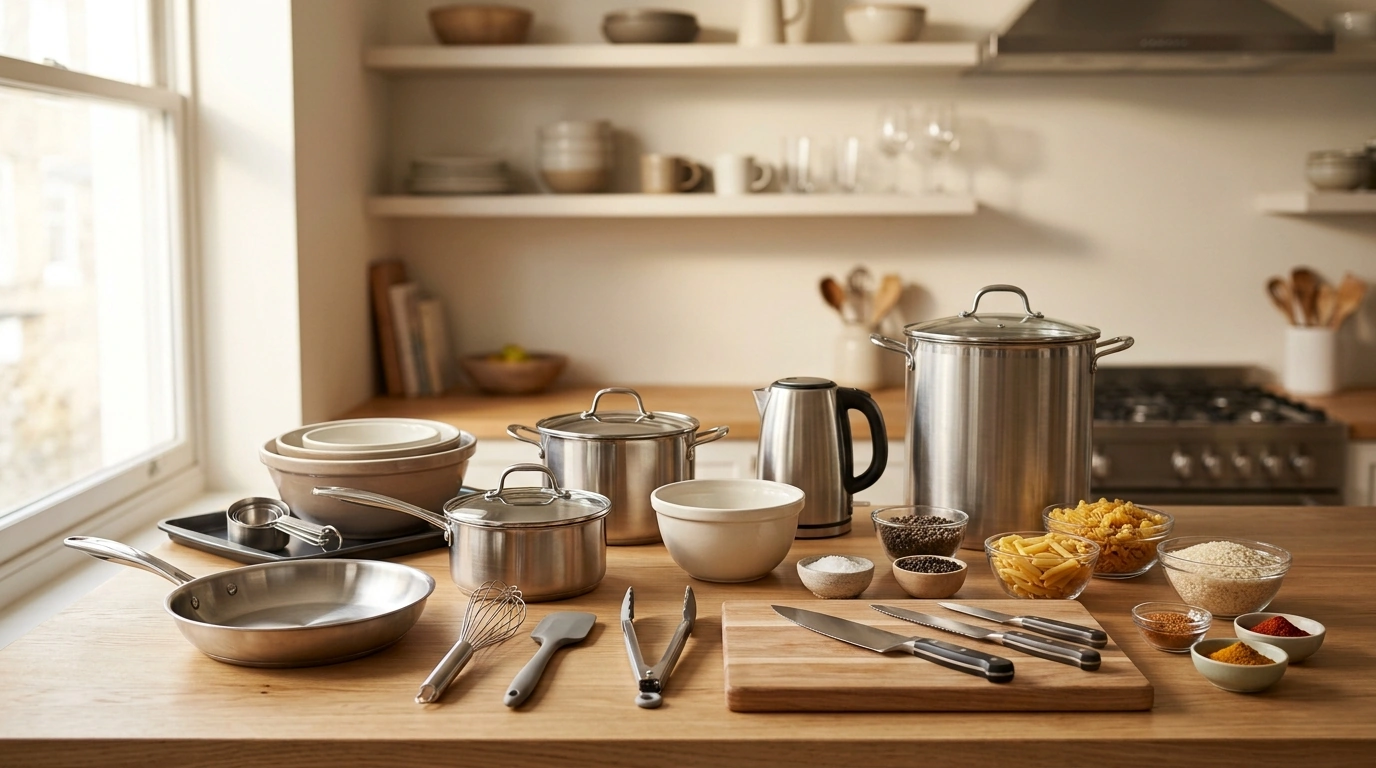
Kitchen essentials lists are practical checklists of the core tools, cookware, appliances, and pantry items that make everyday cooking easier. Instead of buying random gadgets, these lists help prioritize what truly gets used—whether someone is stocking a first apartment kitchen, replacing worn-out basics, or upgrading for more frequent home cooking.
Most kitchen essentials lists are organized by categories, so it’s easy to build a setup in stages:
A solid starter set usually includes a skillet, a saucepan, a larger pot (like a stockpot or Dutch oven), and a sheet pan. Add a baking dish or muffin tin if baking is part of the routine. The goal is versatility: items that can handle weeknight meals, batch cooking, and simple oven recipes.
Instead of a big knife block, many lists focus on a few high-utility pieces: a chef’s knife, paring knife, and serrated knife, plus a cutting board. A knife sharpener or honing steel is often listed as an essential because a sharp blade is safer and more effective.
These include spatulas, tongs, a whisk, measuring cups and spoons, a can opener, and mixing bowls. If space is limited, essentials lists often recommend multi-use tools that reduce clutter—like nesting bowls or a box grater that also zests.
Many lists separate “must-haves” (like a reliable blender or electric kettle) from “nice-to-haves” (like air fryers or smart appliances). For a deeper breakdown of core picks and modern upgrades, visit this kitchen essentials checklist guide.
Kitchen essentials lists often include foundational ingredients—salt, pepper, cooking oil, vinegar, rice or pasta, and a few go-to spices—so cooking doesn’t stall for one missing item.
Start with versatile cookware, a small set of quality knives, basic utensils, and pantry staples like oil, salt, and a few spices. Choose multi-purpose items first, then add specialty tools after cooking habits are established.







Leave a comment