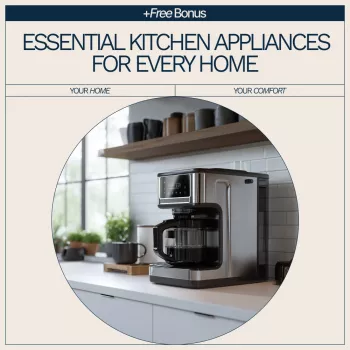
A functional kitchen isn’t about owning every gadget—it’s about covering the basics for how you actually cook, then adding upgrades that make routines safer, faster, and easier to maintain. Use the checklist-style framework below to sort purchases into “must-have,” “nice-to-have,” and “later,” so you can buy with confidence and avoid clutter.
Before comparing finishes, app features, or bundle deals, define your day-to-day reality. A kitchen built for quick reheating looks different than one built for weekend baking or batch cooking.
These are the workhorses. If the budget is tight, prioritize reliable performance and easy upkeep over “extra” features you won’t use.
Focus on stable temperatures and usable shelving. Adjustable bins and a door swing that fits your layout matter more than specialty beverage drawers for most homes. For efficiency comparisons, check ENERGY STAR product guidance.
Match the heat source to your cookware and ventilation. If you often roast vegetables or bake, make sure the oven fits standard half-sheet pans and has predictable temperature control.
If you mainly reheat leftovers, a microwave is the simplest choice. If you want crisp results (pizza, fries, toast) or small-batch baking without heating the whole kitchen, a toaster oven or air fryer-style convection unit can be more useful.
Ignore “place settings” marketing and look at rack layout, filtration, noise rating, and how well it dries. Easy filter access is a long-term sanity saver.
| Appliance | Best for | What to check before buying | Common upgrade |
|---|---|---|---|
| Refrigerator | Everyday storage, meal prep | Capacity, shelf flexibility, temperature consistency, door swing | Door-open alerts, energy-saving modes |
| Range / Oven | Daily cooking, roasting, baking | Power/BTU or wattage, oven size, ventilation, controls | Induction for faster, safer heating |
| Microwave | Fast reheating | Interior size, venting (OTR), presets, ease of cleaning | Sensor reheat and child lock |
| Toaster oven / Air fryer | Crisping, small meals | Basket/pan size, temperature range, cleanup | Combination convection models |
| Dishwasher | Time-saving cleanup | Rack design, noise, drying performance, filter access | Auto-open drying, leak protection |
Small appliances should earn their footprint. Buy the ones that support weekly habits and skip the single-purpose devices that become cabinet clutter.
Use these categories as a “printable-style” checklist. Mark each item as Must-have, Nice-to-have, or Later, then add quantities only after you’ve cooked a few weeks.
If you want a ready-to-use format you can save, print, and update as you shop, see the Printable checklist and smart-home kitchen setup guide.
Smart upgrades work best when they reduce worry and steps—not when they add notifications. Start with protection, then layer in convenience.
For fire and alarm best practices, reference NFPA smoke alarm guidance, and look for recognized safety certification where applicable (for example, UL Solutions certification information).
For planning help beyond the kitchen—like naming themes for gatherings, generating menu ideas, or organizing a rotation of meals—consider How AI Can Spark Your Next Big Idea | Digital Guide.
Start with core appliances for cold storage, cooking, and reheating, plus a small set of durable cookware, a sharp knife and cutting board, measuring tools, basic storage, and a simple cleaning setup. Add small appliances only when they match weekly habits and save real time.
They’re grouped by function—prep, cookware, measuring, storage, cleaning, and safety—so you can mark each item as must-have, nice-to-have, or later. This structure makes it easier to create a printable checklist and avoid buying duplicates.






Leave a comment