HomeBlogBlogAI Smart Home Trends 2026: On-Device, Matter, Energy

AI Smart Home Trends 2026: On-Device, Matter, Energy

AI Smart Home Trends 2026: On-Device, Matter, Energy

Top AI Smart Home Trends: Smart Living and Future Home Technology

AI is shifting smart homes from app-controlled gadgets to homes that anticipate needs, reduce wasted energy, and improve safety. The biggest changes are happening in everyday routines—lighting, climate, security, entertainment, and accessibility—powered by better on-device intelligence, stronger interoperability, and more practical automations.

What’s Changing in AI-Enabled Smart Homes

Smart homes are becoming less about individual “smart” devices and more about coordinated systems that quietly improve daily life.

  • From manual control to proactive automation: systems suggest or trigger actions based on patterns like sleep schedules, commute times, and weather.
  • From single-device smarts to whole-home coordination: thermostats, lights, locks, and sensors share context so actions make sense together.
  • From cloud-only to hybrid intelligence: more processing happens locally for speed, resilience, and privacy.
  • From novelty voice commands to reliable routines: fewer “wow” moments, more consistent value every day.

Trend 1: On-Device AI for Faster, More Private Automation

On-device (or hybrid) AI is a major upgrade for responsiveness and privacy. When routine decisions happen locally—on a hub, camera, or smart speaker—automations can trigger in near real time and continue working even when the internet is unstable.

  • Local processing enables quicker responses for motion-triggered lighting, smart locks, and safety alerts.
  • Reduced dependency on internet outages improves reliability for core routines.
  • Privacy improves when video/audio analysis can stay on the hub/camera instead of being uploaded.
  • Practical setup tip: prioritize devices that support local automations and local storage options.
Cloud AI vs On-Device AI (Quick Comparison)

Capability Cloud-Heavy Setup On-Device/Hybrid Setup
Speed for automations Depends on internet latency Near-instant for local triggers
Privacy control More data leaves the home More data can stay local
Works during outages Limited or partial Often continues locally
Best for Large-scale model features, remote access Security, routines, responsiveness

Trend 2: Interoperability Gets Practical (Matter and Multi-Platform Homes)

Interoperability is moving from a promise to something that feels tangible during setup and daily use. With broader adoption of Matter, onboarding is simpler and multi-platform households can avoid the “wrong app” spiral.

  • Standardized device onboarding reduces “which app do I need?” confusion.
  • Multi-assistant households become easier: a phone, speaker, and hub can control the same devices.
  • Buying tip: look for Matter support and confirm the features you need—some device categories and advanced capabilities still vary by ecosystem.
  • Network tip: stronger Wi‑Fi and/or Thread-capable hubs can improve stability as device counts grow.

For a deeper overview of the standard, the Connectivity Standards Alliance has a helpful reference on Matter.

Trend 3: Energy Optimization That Adapts to Real Life

Energy-saving automations are becoming more “human”—less rigid scheduling, more adaptation to how a home actually runs. AI can learn occupancy patterns, track temperature drift, and incorporate time-of-use rates (where available) to cut waste without making rooms feel uncomfortable.

  • AI uses occupancy, temperature trends, and time-of-use rates to reduce waste without sacrificing comfort.
  • Smart scheduling becomes dynamic: heating/cooling and charging adjust based on routine changes.
  • Key integrations: smart thermostats, smart plugs, whole-home energy monitors, and utility rate plans where available.
  • Household-friendly approach: start with 1–2 high-impact automations (HVAC + lighting) before expanding.

For a broader perspective on digitalization and energy systems, see the International Energy Agency’s Digitalisation and Energy report.

Trend 4: Smarter Home Security With Context, Not Noise

Security cameras and sensors are getting better at filtering what matters. Instead of sending constant alerts, modern computer vision can identify people versus pets, recognize vehicles, and reduce repetitive motion notifications caused by shadows or tree branches.

  • Computer vision reduces false alerts by distinguishing people, pets, vehicles, and packages.
  • Contextual rules improve relevance: “alert only if no one is home” or “only at night.”
  • Privacy and safety basics: use strong account security, unique passwords, and device updates.
  • Placement matters: aim cameras away from sensitive areas, define activity zones, and configure retention periods.

For foundational guidance on connected device security, the NIST Cybersecurity for IoT Program is a strong starting point.

Trend 5: Predictive Maintenance and Proactive Notifications

AI is expanding beyond “control” into “care and maintenance.” With the right sensors and usage data, homes can surface early signals that something is off—before it becomes expensive.

  • Sensors and usage patterns can flag issues early (HVAC performance changes, leaks, abnormal power draw).
  • Water leak detection and smart shutoff valves are expanding from premium to mainstream options.
  • Appliance reminders become more accurate when based on real runtime instead of fixed schedules.
  • Best practice: use tiered alerts—urgent notifications for safety; weekly summaries for optimization.

Trend 6: AI-Driven Comfort and Accessibility

Trend 7: The Rise of Home AI Assistants Beyond Voice Commands

Building a Future-Ready Smart Home Setup

Digital Guide: A Simple Way to Plan Upgrades and Automations

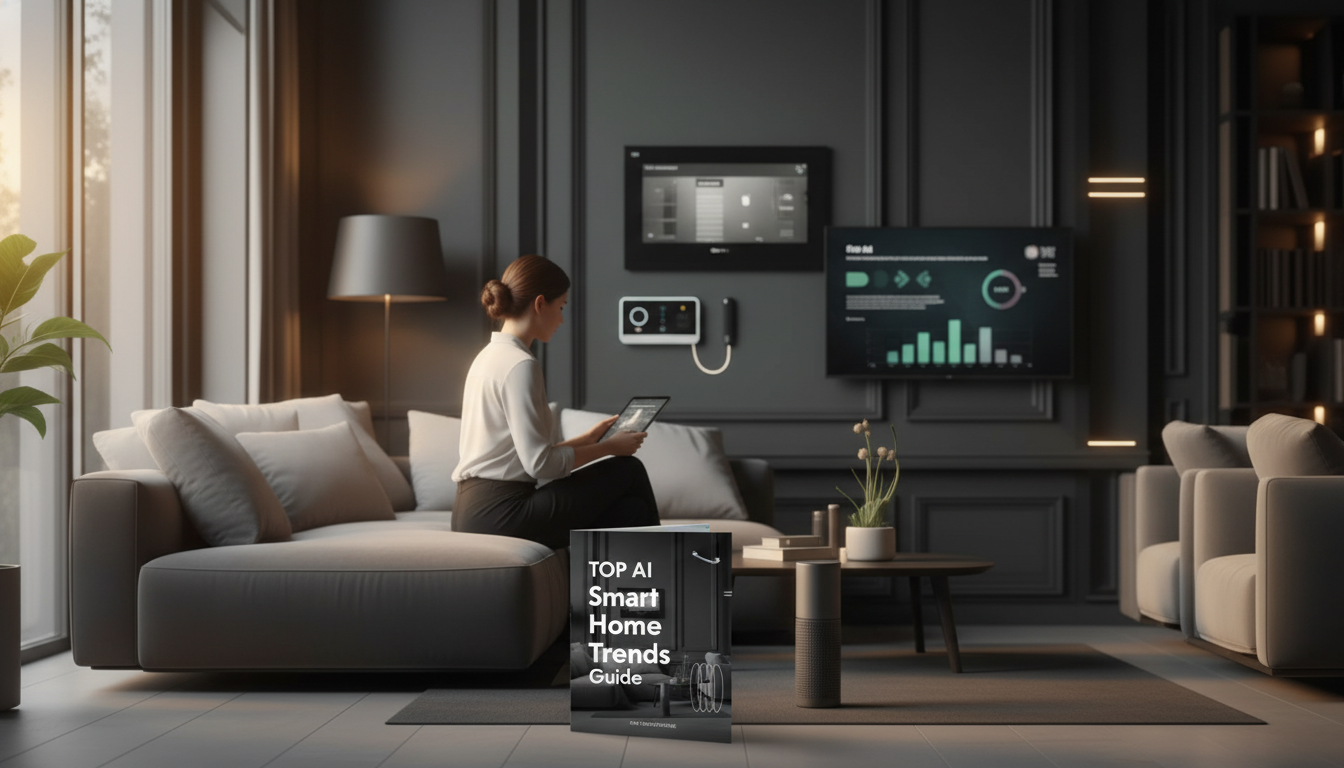
If you want a quick, structured way to map these trends to real rooms and budgets, the Top AI Smart Home Trends Guide (digital download) is designed for quick reference while shopping and setting up routines.

For a practical mindset boost while taking on home projects and new systems, Building Mental Toughness Guide (Digital Download) can help you stay consistent through setup, troubleshooting, and habit-building.

FAQ

Which brand is best for smart homes?

The best brand depends on which ecosystem fits your household (Apple, Google, or Amazon), which device types you need most, and how important cross-platform compatibility is. Pick a primary platform, prioritize Matter support where possible, and choose brands known for consistent security updates and local control options.

What is the home automation trend in 2026?

Hybrid on-device AI, practical interoperability through Matter/Thread, proactive energy optimization, and security alerts with fewer false positives are leading the shift. Natural-language automation creation is also improving, alongside stronger privacy controls and more reliable “quiet” routines.


Was this article helpful?

Yes No
Leave a comment
Top

Yay! 10% Off Just for You!

Join our community and enjoy 10% off your first order. Subscribe for exclusive deals!

Shopping cart

×