
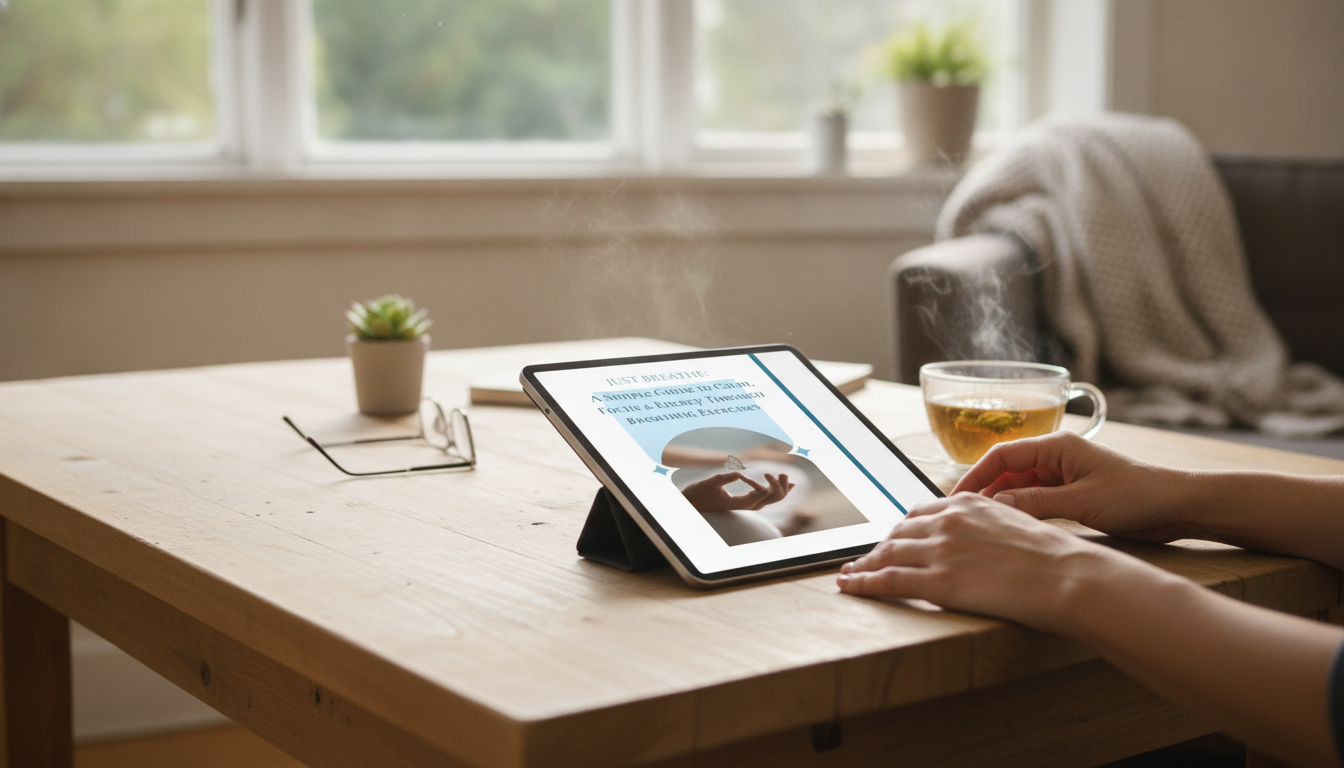
Breathing is one of the fastest “tools you already carry” for shifting how you feel. With a few controlled cycles, many people can downshift stress, steady attention, or feel a quick lift in alertness—no equipment, no special setting, no long warm-up. The key is keeping it simple: choose an exercise that matches your goal (calm, focus, or energy), keep the breath comfortable, and repeat it consistently in short sessions that actually fit real life.
Controlled breathing can support a calmer stress response by influencing arousal and heart-rate patterns. It also helps attention by giving the mind a single, steady anchor—a rhythm you can return to when thoughts scatter. And when used thoughtfully, slightly faster patterns can increase a sense of energy, especially during an afternoon slump.
It’s not a replacement for medical care. If you have severe anxiety, breathing disorders, unexplained shortness of breath, or chest pain, get professional guidance. For most people, the best results come from short, consistent practice rather than long, occasional sessions. Think “one to five minutes, most days,” instead of “twenty minutes once in a while.” For more background on relaxation and breathing practices, see the NHLBI overview of breathing exercises and the NCCIH guidance on relaxation techniques.
If you only do one thing, do this. It’s short enough to use before a meeting, after a stressful message, or between tasks.
Calming practices work best when they emphasize a controlled, relaxed exhale. The goal isn’t to “get more air,” but to send your nervous system a steady signal of safety.
When to use: before stressful conversations, after a triggering notification, or as a bridge into sleep. Common mistake: forcing a big inhale. Prioritize a relaxed, controlled exhale and stop if you feel strained. If you’re curious how stress affects the body overall, the APA overview on stress effects is a helpful reference.
Focus-oriented breathing is about rhythm and consistency. You want a pattern that feels steady—alert but not edgy, calming but not sleepy.
When to use: before deep work, study blocks, writing, or any task requiring sustained attention. Troubleshooting: If you get sleepy, shorten the exhales slightly, avoid long breath holds, or practice standing.
| Goal | Simple pattern | Time needed | Best moments to use | Notes |
|---|---|---|---|---|
| Calm | Inhale 4 / Exhale 6 | 60–180 seconds | After stress spikes, before sleep | Keep breath soft; reduce counts if strained |
| Focus | Inhale 5 / Exhale 5 | 3–5 minutes | Before deep work, during breaks | Even rhythm; avoid breath holds if anxious |
| Energy | Shorter, brisk nasal breaths (comfortable pace) | 30–90 seconds | Afternoon slump, pre-workout | Stop if dizzy; follow with slow breathing |
| Fast reset | Physiological sigh + long exhale | 10–30 seconds | Right after startling stress | Use a few reps, not prolonged |
Energy breathing should feel activating but controlled. If you push too hard or too fast, you’ll trade alertness for dizziness—so keep it gentle and short.
Many people notice a shift in 30–120 seconds, especially with gentle longer exhales. Comfort matters more than strict counts, and consistency tends to improve results over time.
Yes—this can happen if you breathe too deeply or too fast. Slow down, reduce counts, avoid forceful inhales, and return to normal breathing; if it keeps happening, seek medical advice.
Even, moderate-paced breathing (equal inhale/exhale) or counting breaths often supports focus without drowsiness. If you still feel sleepy, practice upright or standing and slightly shorten the exhales.









Leave a comment