HomeBlogBlogCalm Yoga Checklist: 10–20 Minute Serene Flow Routine

Calm Yoga Checklist: 10–20 Minute Serene Flow Routine

Calm Yoga Checklist: 10–20 Minute Serene Flow Routine

The Serene Flow Calm Yoga Checklist: A Simple Routine for a Peaceful Practice

A calm yoga routine becomes easier to keep when each step is clear, gentle, and repeatable. This guide lays out a soothing checklist-style flow that combines grounding setup, mindful movement, and breathwork so a practice can feel steady on busy days and restorative on quiet ones. For general background on yoga and its potential benefits, the National Center for Complementary and Integrative Health (NCCIH) offers a helpful overview.

What “calm yoga” can look like day to day

Calm yoga tends to prioritize nervous-system support over intensity. That usually means slower transitions, fewer posture changes, and more time spent letting the body settle into each shape.

  • Focus on steadiness and ease rather than sweating, flexibility milestones, or pushing range of motion.
  • Use small environmental choices to set the tone: dimmer light, softer music (or none), and a consistent start ritual.
  • Keep cues simple and sensory: notice feet, breath, jaw, shoulders—without constant “fixing.”
  • Favor longer exhales and slower movement to encourage downshifting.

Before you begin: a 3-minute setup that signals safety

A calming practice begins before the first pose. A short setup helps the mind stop scanning for what to do next and start recognizing, “I’m safe enough to soften.”

  • Choose a small practice zone and reduce visual clutter. A clear corner is plenty.
  • Pick one prop that feels supportive today: a folded blanket for knees, a cushion for seated comfort, or a strap for gentle range of motion.
  • Decide the practice length (10, 15, or 20 minutes) and commit to stopping when the timer ends.
  • Use a simple opening cue: one hand on chest, one on belly, then follow the breath for 5 easy cycles.

The Serene Flow checklist: a gentle sequence you can repeat

When the goal is calm, less variety often helps. A repeatable sequence reduces decision fatigue and makes it easier to notice subtle shifts—like shoulders dropping or breath becoming quieter.

Sequence highlights

  • Start low and slow: begin seated or lying down to reduce the urge to rush.
  • Warm the spine with simple shapes (cat-cow or pelvic tilts) and keep the neck relaxed.
  • Add grounding holds: child’s pose, low lunge with hands on blocks, or supported bridge.
  • Choose one standing pose at most (mountain or forward fold) if energy allows; skip standing if it feels overstimulating.
  • Close with a longer rest: legs up the wall or savasana with a blanket over the body for a settling effect.

Quick Calm Yoga Checklist (10–20 minutes)

Step Time What to do Calming cue
Arrive 1–2 min Sit or lie down; soften the face and shoulders Exhale longer than inhale
Warm 2–4 min Gentle spine movement (cat-cow, pelvic tilts) Move at 60–70% effort
Ground 4–8 min Supported holds (child’s pose, low lunge, supported bridge) Feel contact points (hands, knees, feet)
Settle 2–4 min Breathwork (box breathing or 4–6 breathing) Relax the jaw; tongue soft
Rest 3–6 min Savasana or legs up the wall Let the breath be natural

Breathwork options to pair with gentle movement

Breathwork is often the “glue” that turns stretching into a calming practice. If you’d like a science-backed explanation of why breath control can reduce stress response, Harvard Health Publishing summarizes it clearly here: Breathing exercises for relaxation.

  • 4–6 breathing: inhale for 4, exhale for 6. Continue for 2–5 minutes to emphasize downshifting.
  • Box breathing (4-4-4-4): inhale, hold, exhale, hold—each for 4. Keep it light; stop if it increases tension.
  • Sighing exhale: inhale through the nose, then a slow audible exhale. Try 3–5 rounds to release tightness.
  • If counting feels stressful, switch to one cue: soft inhale, longer exhale.

Mindfulness prompts that reduce overthinking

Mindfulness doesn’t have to mean intensely monitoring every detail. The most calming approach is often the simplest: choose one anchor and return to it, kindly, every time attention drifts.

  • Use one anchor per minute: feel the feet, then the belly, then the hands, then the breath.
  • Label gently: “thinking,” then return to sensation without analyzing the thought.
  • Scan for hidden effort: brow, tongue, throat, and fingertips often grip without notice.
  • Close with one sentence of intention: “May the next hour be steady,” or “Ease over urgency.”

Making the checklist a habit without adding pressure

A calm routine becomes realistic when it’s allowed to be small. Consistency builds trust faster than occasional “perfect” sessions.

  • Attach practice to an existing cue (after brushing teeth, before the first coffee, or after work shoes come off).
  • Keep a “minimum version” (5 minutes: arrive, one stretch, one breath practice, rest).
  • Track consistency, not performance: a simple checkmark is enough.
  • If a day is skipped, resume with the minimum version rather than trying to “make up” time.

Who this calm routine supports best

A printable guide to keep nearby

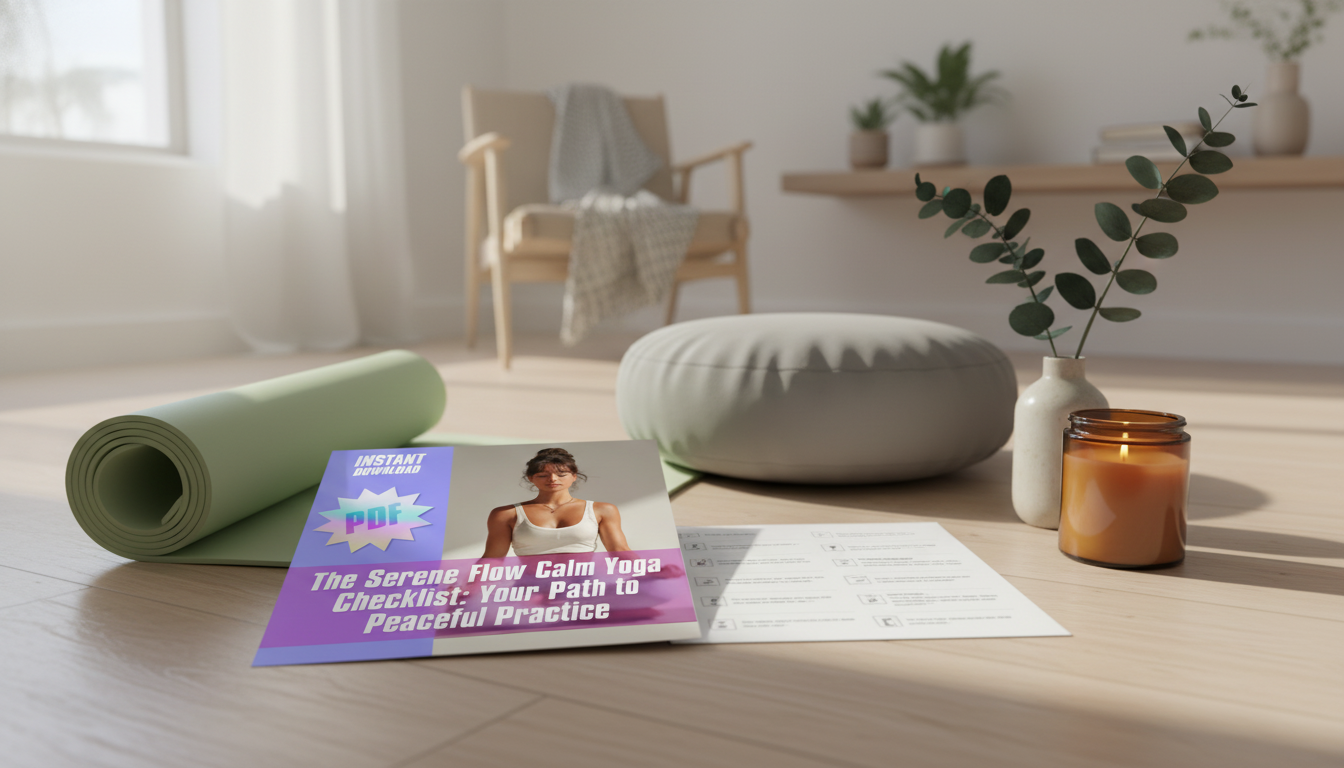
A printable checklist reduces decision fatigue because the next step is always visible. If you want a one-page routine you can print, save to a tablet, or keep on a phone for travel, explore The Serene Flow Calm Yoga Checklist: Your Path to Peaceful Practice.

For days when calm also means building steadiness under pressure, pairing gentle yoga with mindset support can be useful. A complementary option is Building Mental Toughness Guide | Digital Download for Personal Growth | Mindset Strength Workbook | Self-Improvement eBook | How to Build Mental Toughness, which can help you stay consistent without turning routines into another source of stress.

FAQ

What is a serene sense of calm?

It’s a steady, settled state where attention feels less pulled by urgency and the body feels safer to soften. Common signs include slower breathing, reduced muscle gripping (especially in the jaw and shoulders), and clearer, quieter focus—often supported by gentle movement, longer exhales, and consistent routines.


Was this article helpful?

Yes No
Leave a comment
Top

Yay! 10% Off Just for You!

Join our community and enjoy 10% off your first order. Subscribe for exclusive deals!

Shopping cart

×