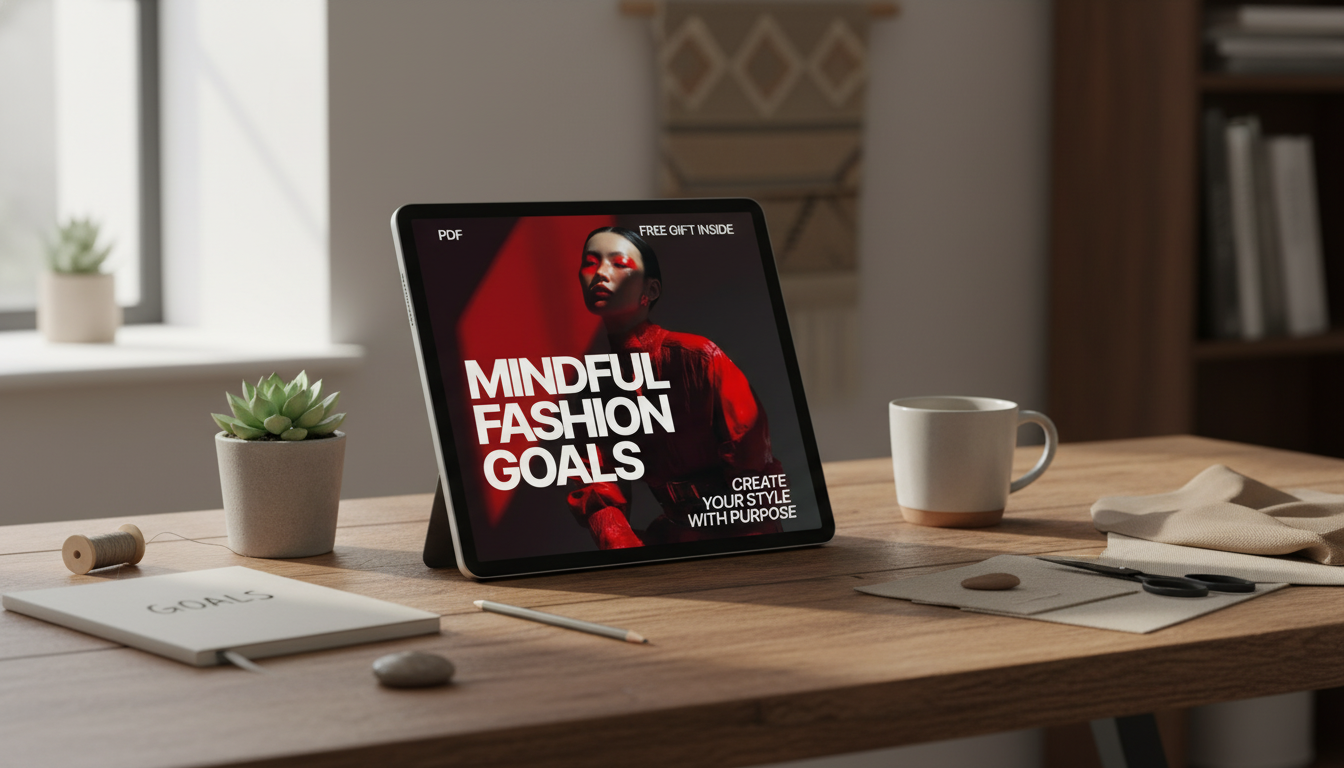
Mindful Fashion Goals: Create Your Style with Purpose
Mindful fashion goals turn getting dressed into a values-led practice: fewer impulse buys, clearer personal style, and a wardrobe that supports real life. Instead of chasing constant “new,” mindful goals help you decide what matters (comfort, creativity, durability, budget, impact) and build repeatable habits for shopping, outfit planning, and care—so style decisions feel calm, intentional, and consistent.
What mindful fashion goals are (and what they are not)
Mindful fashion goals connect what you wear to what you prioritize—comfort, self-expression, ethics, cost-per-wear, reduced waste, or all of the above. The point isn’t to reach perfection or to stop buying anything new; it’s to create a decision system you can actually stick to.
- Systems over perfection: setting a process for choices (rules and routines) matters more than “never slipping up.”
- Flexible and seasonal: goals can change with your body, job, climate, and identity.
- Fewer decisions: simple guardrails—palette, silhouettes, fabric preferences, and shopping rules—reduce decision fatigue.
Start with a wardrobe audit that respects your life
A mindful reset starts with information, not judgment. Do a quick scan and note what you wear repeatedly, what stays untouched, what feels “almost right,” and what’s one small fix away from being great.
- Sort by function: work, casual, occasions, active, outerwear, footwear, accessories.
- Spot gaps that trigger last-minute purchases (like “nothing warm enough for mornings” or “no comfortable event shoes”).
- Identify friction: scratchy fabrics, unreliable fit, hard-to-style colors, high-maintenance pieces, or items that don’t match daily activities.
- Create three lists: love & wear, like but needs tweak, and ready to release (sell, donate responsibly, recycle where possible).
Quick audit checklist
| Check |
What to look for |
Action |
| Fit & comfort |
Pinching waistbands, slipping straps, restrictive shoes |
Tailor, replace, or set a rule to avoid that fit type |
| Versatility |
Only works with one item or one occasion |
Plan pairings or move to a “special occasion” capsule |
| Fabric & care |
Pilling, static, overheating, dry-clean-only overload |
Prioritize durable fabrics and manageable care |
| Condition |
Loose hems, missing buttons, worn soles |
Repair schedule or replacement plan |
| Alignment |
Does it match current lifestyle and values? |
Keep if aligned; otherwise release |
Define your “purpose” in three layers
“Purpose” gets clearer when it’s broken into layers you can act on. Aim for 5–7 non-negotiables that make shopping and outfit planning simpler.
- Personal layer: confidence, sensory comfort, body changes, and identity.
- Practical layer: weather, commute, dress codes, caregiving, movement needs, and laundry reality.
- Impact layer: budget boundaries, longevity, secondhand-first approach, fiber preferences, and brand standards (labor, materials, transparency).
Examples of non-negotiables: “no itchy necklines,” “shoes must handle a full day of walking,” “no dry-clean-only unless it’s a true workhorse,” “buy fewer, higher-use pieces.”
How to choose goals that are realistic (especially when motivation dips)
The most effective goals are specific enough to guide behavior and forgiving enough to survive busy weeks. Start with one primary outcome, then support it with one or two habits.
- Pick one focus: reduce overbuying, refine style consistency, create outfits faster, or shift toward more responsible materials.
- Add constraints that reduce decision load: a monthly spend cap, a maximum number of new items per season, or a “one-in, one-out” rule.
- Use time windows: 30 days to reset habits, 90 days to test a capsule, one season to trial a palette.
- Avoid all-or-nothing targets: aim for a minimum viable version (like 70% secondhand rather than 100%).
- Pair each goal with a behavior: a checkout wait period, weekly outfit planning, or repair-first routines.
Turn goals into a simple plan: values → rules → actions
Mindful fashion works best when values become clear rules and those rules become small recurring actions.
- Values: choose 2–3 priorities (comfort, creativity, minimalism, durability, ethics, budget).
- Rules: translate priorities into filters (fabric list, color palette, preferred cuts, brand standards, shopping channels).
- Actions: schedule repeat steps (monthly wardrobe check, weekly outfit prep, quarterly declutter, seasonal needs list).
Mindful shopping habits that prevent regret
For broader context on why these habits matter, see guidance on fashion’s environmental footprint from the United Nations Environment Programme and circular design principles from the Ellen MacArthur Foundation.
Style clarity tools: palette, silhouettes, and outfit formulas
Care, repair, and longevity goals that pay off
How to Choose
- Start with function: name the exact scenario (commute, office days, weekend walking, events) and the problem you’re solving.
- Check fabric and comfort: prioritize materials you already know you’ll wear for hours, not just in a fitting room.
- Look for construction clues: secure seams, strong stitching at stress points, well-attached buttons, and fabric that recovers shape.
- Confirm outfit compatibility: match it to at least three items you already own; if it only works with one piece, it’s higher risk.
- Choose the best channel: try secondhand, resale, or swaps first; if buying new, favor brands with clear information on materials and supply chains (the OECD overview of garment supply chains explains why transparency varies).
Measure progress without obsessing
FAQ
How many mindful fashion goals should be set at once?
Set one main goal and add one or two supporting habits. Fewer goals make follow-through more likely, such as pairing a monthly spend cap with a weekly outfit plan or a 48-hour pause rule.
What if personal style is changing and the wardrobe feels uncertain?
Build a small transition capsule and run short experiments instead of doing a full overhaul. Use a tight palette and a couple of outfit formulas, and lean on secondhand or rental to test new directions with less risk.
How can mindful fashion work on a tight budget?
Go repair-first, shop secondhand, and use cost-per-wear thinking to prioritize what you’ll use most. Focus spending on durability where it matters (often shoes and outerwear) and keep a needs list to prevent impulse buys.
Recommended for you













Leave a comment