
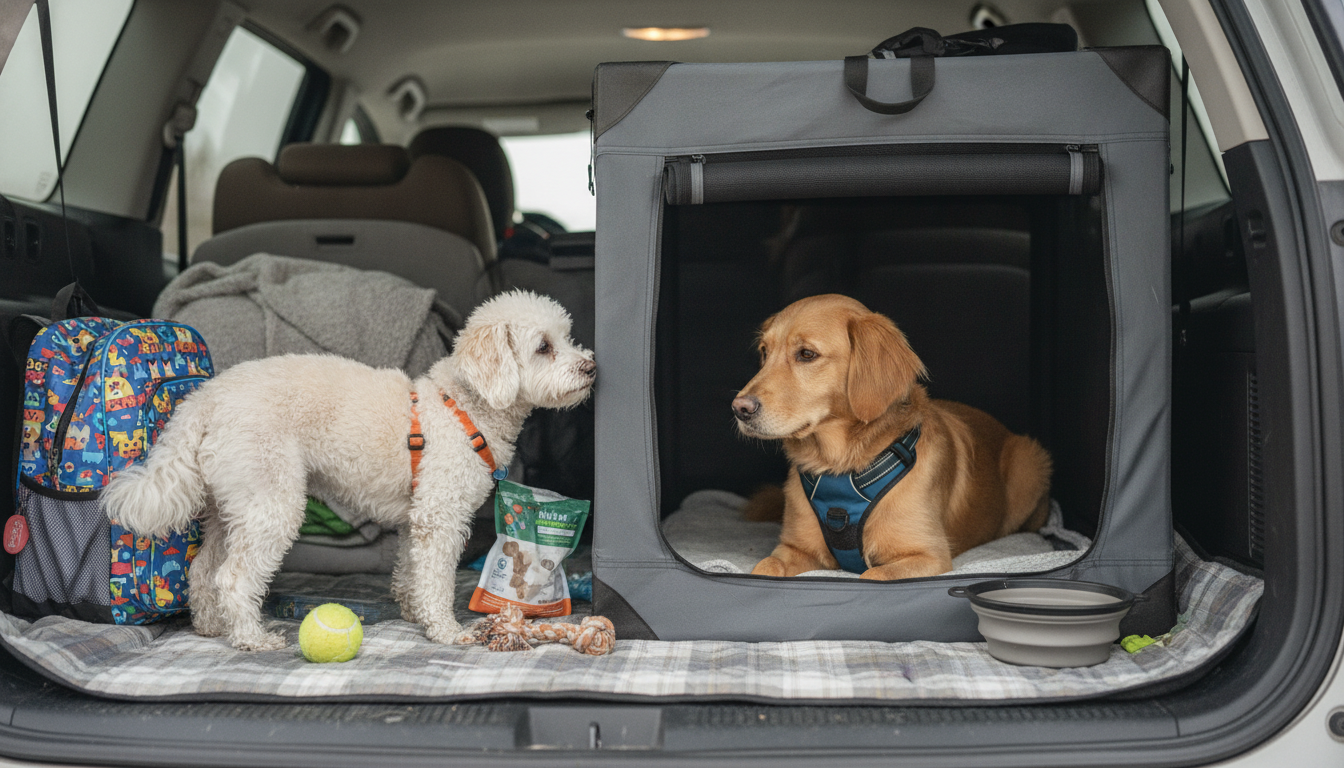
When introducing dogs, the biggest mistakes are the ones that add pressure, remove escape routes, or reward the wrong behavior. A thoughtful setup prevents scuffles and helps both dogs feel safe enough to relax.
A head-on approach can feel confrontational. Avoid marching two dogs straight toward each other or letting them stare. Start with calm, parallel movement (like a short walk) so they can take in each other’s scent and body language without pressure.
A taut leash can create frustration and make reactions more intense. Keep leashes loose and avoid yanking or holding dogs nose-to-nose “so they can work it out.” If either dog is tense, create distance and reset.
Small entryways, narrow hallways, and crowded rooms increase conflict. So do hotspots like couches, beds, doorways, and food areas. Choose a neutral, open area and keep valuable resources out of the scene at first.
Skipping the “early warnings” is a common setup for a blowup. Stiff posture, hard staring, lip lifting, freezing, whale eye, tucked tail, or repeated avoidance are reasons to slow down. Give breaks before either dog feels cornered.
One dog repeatedly pouncing, body-slamming, pinning, or chasing a dog that’s trying to disengage isn’t healthy play. Interrupt calmly, separate for a breather, and reintroduce only when both dogs can stay loose and responsive.
Growling is communication. Correcting it can remove the warning while leaving the discomfort in place. Instead, increase distance, end the interaction, and rebuild with slower steps.
Even “friendly” dogs can get overwhelmed. Use gates, crates, and short sessions to prevent mistakes while you build positive associations. For a step-by-step approach that also helps with multi-pet households, see this calm, safety-first introduction guide.
Plan on several days of structured, supervised time with plenty of breaks, using gates or separate rooms as needed. Increase shared time only when both dogs consistently show relaxed body language and can disengage easily.











Leave a comment