
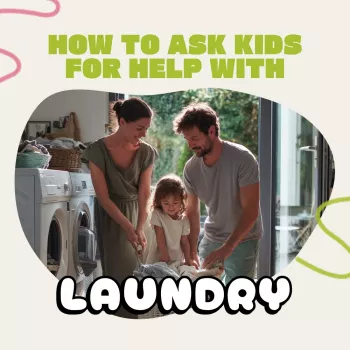
Turn sorting into a quick, repeatable routine with clear “rules your child can see.” Start by setting up three containers (or floor spots) labeled with simple cues: Lights, Darks, and Brights. Use examples your child already recognizes—white socks for Lights, black leggings for Darks, and red shirts for Brights. Keep the first sessions short (3–5 minutes) and stop while it’s still easy.
Use open bins, baskets, or even paper bags. Add a color swatch or a taped-on fabric sample (a white scrap for Lights, a dark scrap for Darks). Place the stations right where clothes come off or where the hamper lives so your child isn’t carrying piles across the house.
Begin with colors only for a week. Once that’s smooth, add a second pass for fabrics using a second set of labels: Towels, Delicates, and Everyday. Explain it in kid terms: towels are “thick and grabby,” delicates are “stretchy or lacy,” and everyday is “most T-shirts and pajamas.”
If your child is unsure, teach a fast check: “Is it mostly white or very pale? Lights. Is it very dark? Darks. Is it strongly colored? Brights.” For fabrics: “Is it thick like a bath towel? Towels. Does it have lace, straps, or feels silky? Delicates.” If it still feels confusing, create a small “Ask Me” pile so progress doesn’t stall.
Kids learn laundry skills faster with clear requests and predictable steps. A simple checklist (Empty pockets → Sort colors → Sort fabrics → Start washer) keeps the task focused and reduces decision fatigue. For more kid-friendly routines and checklists, visit this guide to helping kids with laundry using clear requests and routines.
Many kids can start sorting simple lights vs. darks around ages 4–6 with supervision. By ages 7–10, they can usually handle basic fabric categories and learn to check labels with help.










Leave a comment