
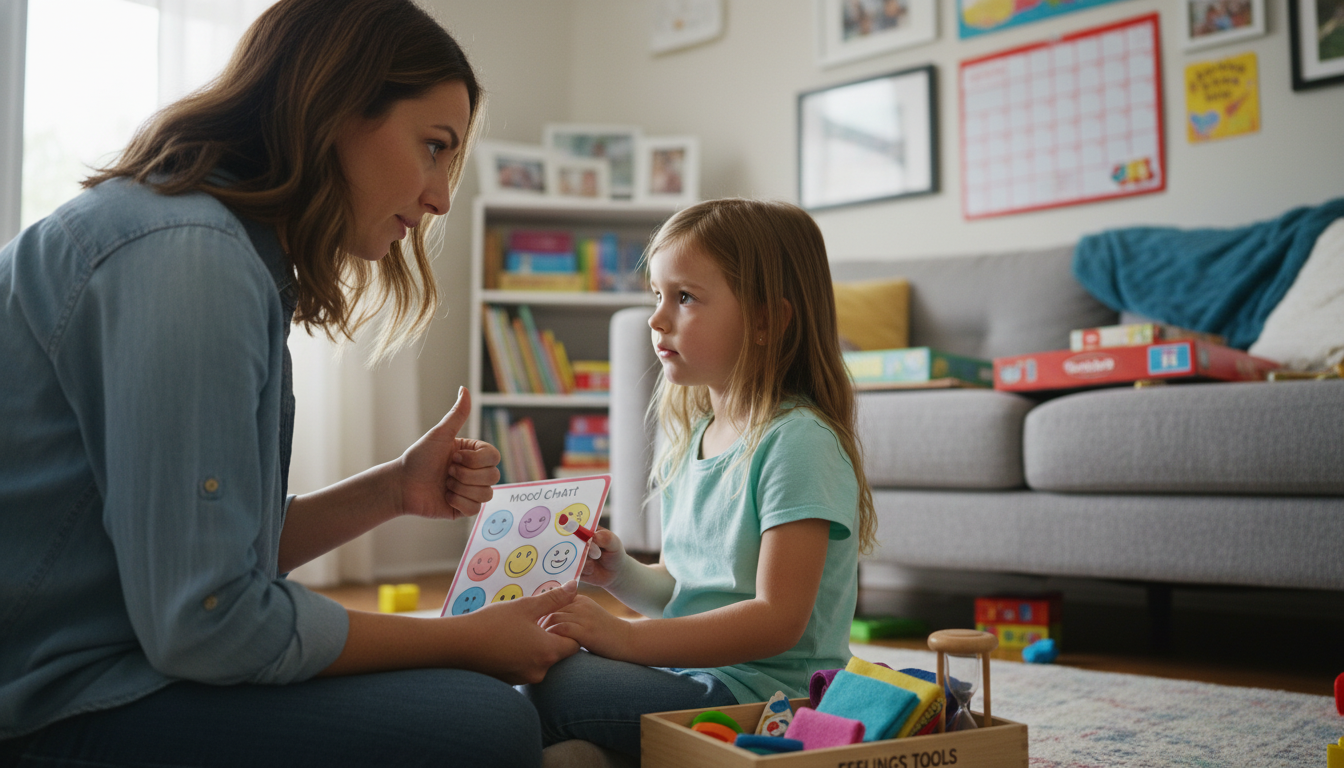
Start by treating stress as a normal body signal, not a problem to hide. Use simple language (“Your body is telling you it needs a break”) and connect feelings to physical cues like a tight tummy, headaches, or trouble sleeping. When kids can name what’s happening, they’re more likely to accept tools that help.
Create a quick “check-in” routine once or twice a day: ask them to rate their stress from 1–5, name one feeling, and point to where they feel it in their body. Younger kids can draw a face or choose a color instead of using numbers. Keep it short and consistent so it feels safe, not like an interrogation.
Pick a single technique and practice it when they’re already calm. Try “box breathing”: inhale for 4, hold for 4, exhale for 4, hold for 4—repeat 3 times. Another option is “5-4-3-2-1 grounding”: name 5 things you see, 4 you feel, 3 you hear, 2 you smell, 1 you taste. The goal is repetition, not perfection.
Kids regulate better with clear transitions: a simple after-school decompression window, a consistent bedtime sequence, and a designated “reset spot” (chair, corner, or quiet room) with a few calming choices like paper to doodle on or a sensory item. Schedule short breaks before big stressors (tests, practices, performances), not only after things go wrong.
Kids learn fastest by watching. Say what you’re doing: “I’m frustrated, so I’m taking three slow breaths before I answer.” This shows that stress management is a skill, not a personality trait.
If stress is affecting behavior or learning, coordinate with teachers or counselors on consistent cues and accommodations (movement breaks, a calm-down pass, or a check-in). For more tools you can use at home and at school, visit this guide on helping kids manage stress.
Common signs include irritability, frequent stomachaches or headaches, sleep changes, clinginess, avoidance of school or activities, and sudden shifts in appetite. Stress can also show up as perfectionism or acting “too silly” to mask worry.










Leave a comment